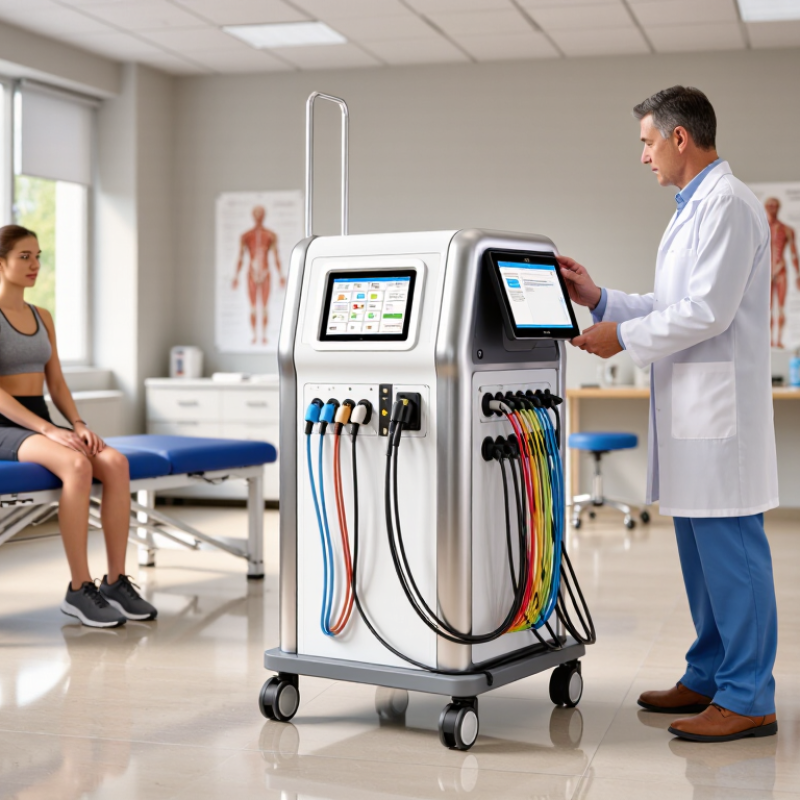
| TENS unit | Delivers electrical pulses through surface electrodes to stimulate sensory nerves. | May be used as an adjunct for temporary pain relief in selected patients. | Many devices offer adjustable frequencies, commonly around 1–150 Hz, and pulse widths that may range roughly from 50–400 microseconds. | Relatively simple to operate; treatment can be adjusted for comfort and patient response. | Check electrode placement, skin sensation, patient tolerance, and device-specific precautions. Pain relief does not establish or treat the underlying cause. |
| NMES / muscle stimulation unit | Uses electrical pulses to produce or assist a muscle contraction. | May support muscle re-education or strengthening when clinically appropriate, including in some rehabilitation programs. | Common programs use frequencies of about 20–50 Hz and pulse widths around 200–400 microseconds; actual settings depend on the device and treatment goal. | Useful when a therapist wants to target a muscle group and document a structured stimulation program. | Contraction quality, comfort, electrode placement, and the patient’s clinical status matter. It is not a substitute for an individualized exercise plan. |
| Interferential current (IFC) unit | Delivers two medium-frequency currents that intersect to create a modulated treatment frequency. | Commonly used in clinics as an adjunctive electrotherapy option for symptom management. | Carrier frequencies are commonly in the kilohertz range, often about 2–10 kHz; modulation settings vary by device and protocol. | Some units provide multiple channels and preset programs for different electrode arrangements. | Confirm the available channels, controls, and electrode configurations. Evidence and suitability depend on the condition and treatment objective. |
| Microcurrent unit | Provides very low-intensity electrical current, often below the level that produces a visible muscle contraction. | Offered by some clinics as an adjunct modality for selected treatment plans. | Output is commonly specified in microamperes; available ranges and waveforms vary substantially between devices. | Low-intensity output may be appropriate when a treatment plan calls for stimulation without a strong motor response. | Compare measurable output specifications and clinical protocols. Do not assume that lower current means better outcomes. |
| Therapeutic ultrasound unit | Converts electrical energy into acoustic energy delivered through a treatment head and coupling medium. | May be used as an adjunct in selected musculoskeletal treatment plans. | Common devices offer 1 MHz and 3 MHz frequencies, with adjustable intensity; available ranges differ by model. | Provides a separate modality from surface electrical stimulation and can be included in a combination device. | Requires appropriate training, coupling, treatment-head movement, and screening of the intended treatment area. Follow device instructions and applicable clinical guidance. |
| Combination electrotherapy and ultrasound unit | Combines electrical stimulation functions with therapeutic ultrasound in one console. | Useful for clinics that routinely provide more than one modality and want shared equipment. | Functions and specifications depend on the configuration; check each output separately rather than relying on the “combination” label. | Can save space and consolidate controls, accessories, and maintenance workflows. | Check whether the modalities can operate independently or simultaneously, the number of channels, consumable costs, service support, and staff training needs. |
| Clinical and safety note | A physiotherapy electric machine is a device that delivers electrical stimulation or another energy-based treatment under a clinician’s direction. No single machine is best for every clinic: selection should reflect patient needs, intended use, staff training, device specifications, maintenance, and local regulations. Screen patients for device-specific contraindications and precautions, follow the manufacturer’s instructions, and consult qualified clinical guidance. The parameter ranges above are general examples, not treatment prescriptions. |