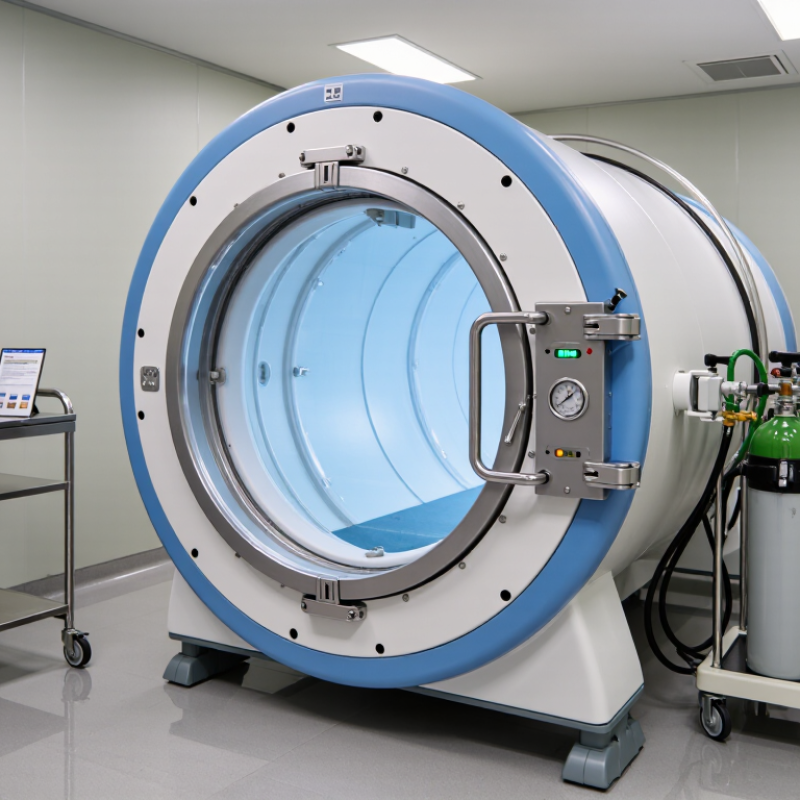
| Operating Pressure | Approximately 1.3 ATA or below for mild hyperbaric use, unless a qualified medical professional specifies otherwise. | Pressure level affects oxygen exposure, ear and sinus stress, equipment design, and regulatory classification. | Check the maximum working pressure, pressure gauge accuracy, pressure-relief system, and written operating limits. |
| Pressure Control | Controlled pressurization and decompression with an easily readable gauge and an independent relief mechanism. | Gradual pressure changes help reduce discomfort and lower the risk of pressure-related injury. | Confirm that the user can stop or reduce pressure immediately and that emergency venting is available. |
| Oxygen Delivery | Clearly defined oxygen source, flow rate, concentration range, tubing connection, and operating instructions. | Oxygen concentration and delivery method influence fire risk, ventilation needs, and the intended use of the chamber. | Ask for oxygen concentration test records, alarm settings, filter replacement intervals, and ventilation instructions. |
| Fire and Ignition Safety | No smoking, flames, sparks, heating devices, petroleum-based products, or unauthorized electrical equipment inside or near the chamber. | Oxygen-enriched environments can make materials ignite more easily and burn more intensely. | Look for a written fire-risk assessment, material compatibility information, grounding instructions, and emergency procedures. |
| Materials and Construction | Pressure-rated materials, transparent viewing areas where applicable, secure closures, durable seals, and documented cleaning compatibility. | The enclosure must withstand repeated pressure cycles without unacceptable leakage, deformation, or material deterioration. | Review pressure-cycle testing, leak-test procedures, material specifications, and maintenance records. |
| Electrical Safety | Electrical components should be suitable for the environment and evaluated against applicable electrical-safety requirements. | Faulty wiring, incompatible equipment, or poor grounding can create shock, spark, and fire hazards. | Request electrical inspection reports, grounding details, overload protection, and instructions for permitted accessories. |
| Emergency Egress | The user must be able to communicate with the operator and exit or be depressurized promptly during an emergency. | Loss of communication, power, ventilation, or pressure control can become hazardous if the user cannot obtain assistance. | Test the intercom or communication method, internal release mechanism, emergency valve, and backup power where provided. |
| User Screening | Medical screening should be completed before use, especially for untreated pneumothorax, serious lung disease, certain ear or sinus conditions, and other relevant risks. | Hyperbaric exposure may affect the lungs, ears, sinuses, and certain medical conditions. | Use a health questionnaire and obtain professional medical advice when the user has a chronic condition, is pregnant, or takes prescription medication. |
| Ear and Sinus Equalization | The operating procedure should teach swallowing, yawning, or other appropriate equalization techniques during compression. | Failure to equalize pressure may cause ear or sinus pain and, in some cases, barotrauma. | Stop compression if pain occurs and follow the operator’s decompression and medical-escalation procedure. |
| Monitoring and Alarms | Continuous monitoring of chamber pressure, oxygen-related parameters where applicable, temperature, ventilation, and alarm status. | Monitoring helps detect abnormal operating conditions before they become serious. | Verify alarm audibility, alarm reset procedures, sensor calibration intervals, and operator response instructions. |
| Cleaning and Infection Control | Smooth, cleanable surfaces and disinfectants that are compatible with chamber materials and oxygen-use restrictions. | Shared equipment can transmit microorganisms, while unsuitable chemicals may damage materials or increase fire risk. | Check the cleaning schedule, approved disinfectants, ventilation time, and procedures for bodily-fluid contamination. |
| Documentation and Traceability | Complete technical file, user manual in Chinese or the user’s working language, maintenance log, risk assessment, and test records. | Traceable documentation supports safe operation, training, maintenance, and regulatory review. | Confirm model identification, serial-number records, inspection dates, spare-parts information, and authorized service procedures. |
| Relevant Standards Framework | Consider applicable Chinese regulations and standards together with recognized frameworks such as ISO 14971 for medical-device risk management, ISO 13485 for quality management, and IEC 60601-1 where applicable. | Standards address different aspects of safety; certification to one standard does not automatically prove suitability for every use. | Verify the exact scope, certificate holder, tested model, certification date, and whether the documents apply to the intended Chinese market and use case. |
| Best-Fit Selection | The best chamber is the one whose pressure range, oxygen system, safety controls, documentation, service support, and intended-use claims match the user and operating environment. | A higher pressure rating or more features do not necessarily mean greater suitability or safety. | Compare verified safety evidence and total operating requirements rather than relying only on price, appearance, or marketing claims. |