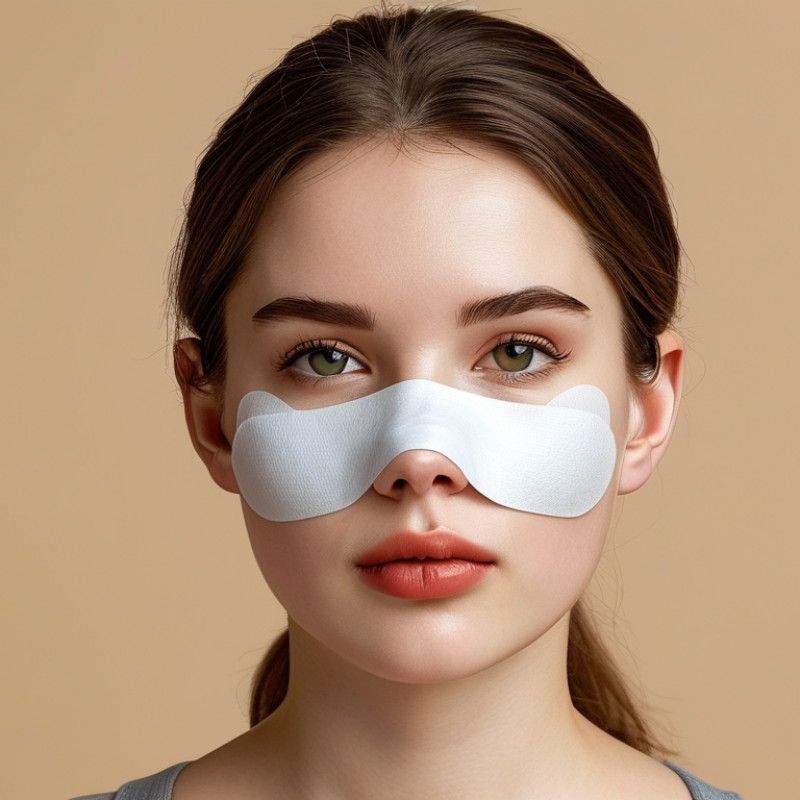
| Primary Function | External nasal dilator worn across the bridge of the nose | Applies gentle outward tension to the sides of the nose, helping reduce external narrowing of the nasal passages | It acts from outside the nose and does not directly treat conditions located deeper in the nasal airway |
| Structural Layer | A flexible adhesive strip containing one or more spring-like support elements | When applied, the strip attempts to return toward its original shape and gently lifts the nasal skin | The lifting effect depends on strip stiffness, shape, placement, and the user’s nasal anatomy |
| Adhesive Layer | Skin-contact adhesive designed for temporary use | Keeps the strip attached while allowing the support element to exert outward force | Clean, dry skin generally improves adhesion; oils, sweat, and facial products may reduce wear time |
| Placement Area | Across the upper or middle portion of the nose, depending on the strip design | Positioning over the area that tends to narrow during inhalation allows the strip to provide mechanical support | Placement should follow the product instructions and avoid irritated, broken, or sunburned skin |
| Airflow Mechanism | Mechanical widening of the external nasal valve region | May decrease resistance to airflow through the front part of the nose, especially when the sidewalls collapse inward | The effect is usually more noticeable when nasal blockage is related to external narrowing rather than congestion alone |
| Breathing Benefit | Non-medicated support for nasal breathing | Can make nasal breathing feel easier for some people by improving the physical opening at the front of the nose | Individual results vary; improved airflow does not guarantee better sleep or resolve every breathing problem |
| Use During Sleep | Designed to remain on the nose during a temporary period, often including nighttime use | Supports the nasal sidewalls while the wearer is lying down and breathing through the nose | It should not be considered a substitute for professional evaluation of loud snoring, pauses in breathing, or suspected sleep apnea |
| Drug-Free Operation | External mechanical design without a decongestant ingredient | Provides physical support rather than changing blood flow or reducing inflammation inside the nasal tissue | People with medication sensitivities may prefer a non-medicated option, but adhesive sensitivity remains possible |
| Skin Compatibility | Materials selected for short-term contact with intact skin | The adhesive holds the strip in place without requiring insertion into the nostrils | Redness, itching, discomfort, or skin damage may occur; discontinue use if irritation develops |
| Size and Shape | Curved, tapered, or segmented forms in multiple sizes | The geometry helps match the contour of the nose and distribute lifting force across the strip | A strip that is too small may provide limited support, while one that is too large may feel uncomfortable or peel at the edges |
| Main Limitation | External support only | It cannot remove mucus, shrink swollen tissue, correct a deviated septum, or replace treatment for an underlying medical condition | Persistent nasal obstruction, breathing difficulty, or sleep-related symptoms should be discussed with a qualified healthcare professional |