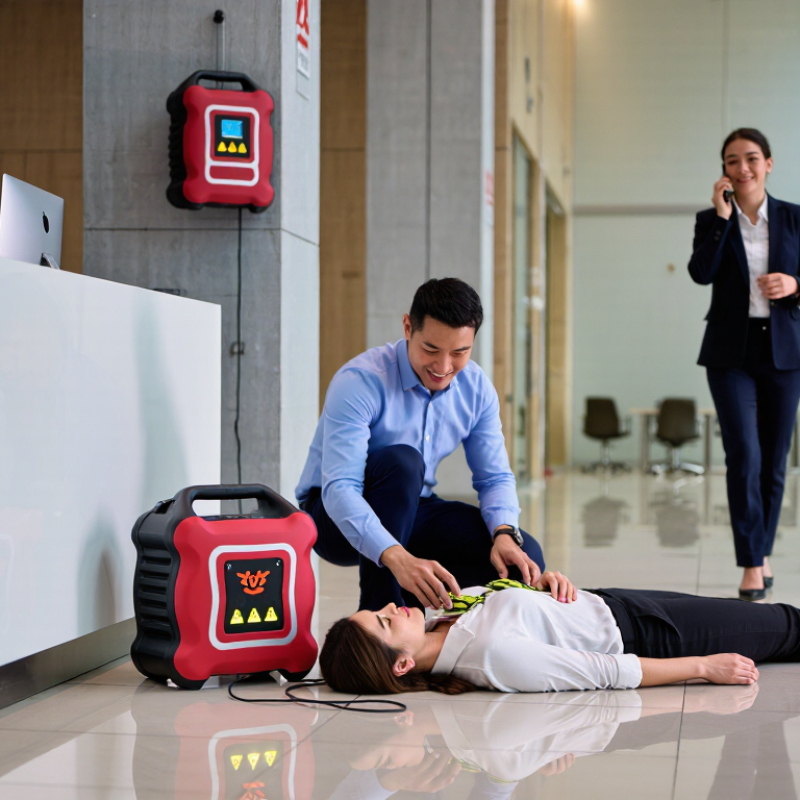
| Time sensitivity | For every minute defibrillation is delayed during sudden cardiac arrest, the chance of survival can decrease by approximately 7%–10%. | Even a short delay while waiting for emergency responders can materially affect the outcome. | An on-site automatic defibrillator can reduce the distance between the person in cardiac arrest and life-saving treatment. |
| Role of early CPR | Immediate CPR can help maintain blood flow to the brain and heart until defibrillation or advanced medical care is available. | Employees trained in CPR can begin support immediately rather than waiting for an ambulance to arrive. | AED use complements CPR and supports a coordinated response during the first critical minutes. |
| Shockable cardiac rhythms | Defibrillation is appropriate for certain life-threatening rhythms, including ventricular fibrillation and pulseless ventricular tachycardia. | The first responder may not know the person’s medical history or the exact cardiac rhythm. | The device analyzes the heart rhythm and advises or delivers a shock only when appropriate, helping guide non-specialist responders. |
| Ease of use | Public-access AEDs are designed for use by trained lay rescuers and provide audible and visual operating instructions. | A simple response process can reduce hesitation and improve consistency during a stressful event. | Automatic prompts, rhythm analysis, and step-by-step guidance help users focus on the response sequence. |
| Emergency response coverage | Emergency medical service arrival times vary according to location, traffic, weather, call volume, and building access. | Large workplaces, multi-floor buildings, campuses, and remote sites may experience additional access delays. | A clearly marked AED placed near high-occupancy or high-traffic areas can improve first-response access. |
| Workplace preparedness | A complete cardiac emergency plan commonly includes recognition, emergency calling, CPR, AED access, and coordination with responders. | A written plan reduces uncertainty about who retrieves the AED, who calls emergency services, and who guides responders. | An AED program can be integrated with staff training, emergency drills, signage, maintenance checks, and access procedures. |
| Maintenance readiness | Electrode pads and batteries have defined service lives and should be checked according to the device instructions and applicable regulations. | An inaccessible, expired, damaged, or uncharged unit may not be ready when needed. | Routine inspections, visible status indicators, documented checks, and assigned responsibility help maintain readiness. |
| Post-event coordination | After an AED is used, emergency medical professionals should be notified, and the device, pads, and battery should be inspected or replaced as required. | A documented recovery process helps restore emergency readiness and supports incident review. | A defined post-use checklist helps ensure the equipment is returned to service promptly and correctly. |