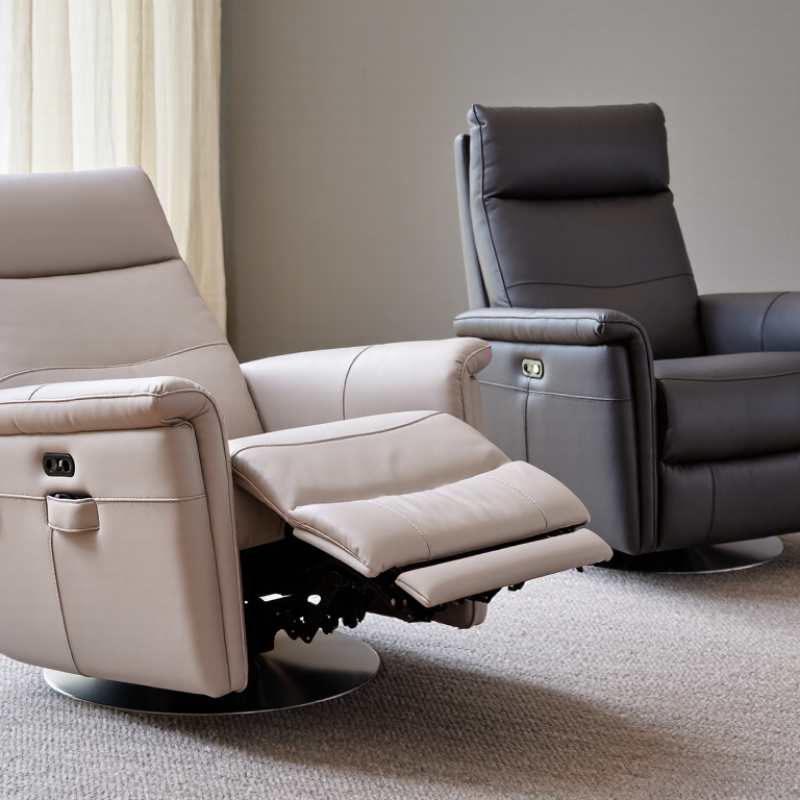
| Motor Configuration | One motor generally controls the backrest and footrest together. | Two independent motors usually control the backrest and footrest separately. | Two independent motors with more precise positioning and additional adjustment functions. | Confirm which sections move independently and whether the mechanism matches the intended use. |
| Positioning Flexibility | Suitable for standard sitting, reading, and reclining positions. | Allows separate adjustment of back angle and leg elevation for improved comfort. | Often supports finer positioning, including independent back, leg, and sometimes headrest adjustments. | Test whether the chair can reach a comfortable upright, resting, and exit position. |
| Movement Speed | Typically steady but may require a longer movement cycle because several sections move together. | Usually provides smoother control because each motor handles a separate function. | May offer smoother, more gradual positioning rather than substantially higher speed. | Prioritize smooth, quiet movement over maximum speed; ask for the full open-and-close cycle time. |
| Lifting Capacity | Capacity varies widely and should be verified from the chair's rated user-weight limit. | May provide stronger or more stable operation, but motor count alone does not determine capacity. | Can include reinforced frames or lift-assist functions, depending on the design. | Choose a model with a rated capacity above the user's weight and avoid using the chair beyond that limit. |
| Operating Noise | A low mechanical hum is normal during operation. | May produce slightly more mechanical sound because two motors operate in the system. | Should operate smoothly without grinding, clicking, or abrupt stops. | Listen for unusual noises and test the chair under normal user load. |
| Control Type | Wired hand control with basic open, close, or recline buttons. | Wired control commonly provides separate buttons for the backrest and footrest. | May include illuminated buttons, memory positions, USB charging, or wireless control. | Select large, clearly labeled buttons that are easy to operate without looking down. |
| Emergency or Manual Release | Some models provide manual access or a reset procedure if power is interrupted. | May include a battery backup or manual release, depending on the mechanism. | Often offers more comprehensive power-failure provisions, but this is not universal. | Ask how the user can return to a safe sitting position during a power outage. |
| Obstacle Detection | Basic models may stop when resistance is detected, but protection levels vary. | May include pinch-protection features around moving joints and the footrest. | May provide more advanced current monitoring or obstruction protection. | Keep hands, pets, and objects away from moving gaps; do not rely only on automatic stopping. |
| Stability and Base | A wide, level base helps reduce rocking during reclining. | A stable frame is important because independent adjustments can shift the center of gravity. | Lift-assist versions should have a stable base and controlled forward movement. | Check for wobbling, uneven flooring, and adequate clearance from walls and furniture. |
| Power Requirements | Usually powered by a low-voltage external adapter connected to a household outlet. | Uses a similar low-voltage power system, with additional motor demand. | May support an optional rechargeable battery pack for temporary cordless operation. | Check adapter ratings, cable routing, battery availability, and whether replacement parts are obtainable. |
| Safety Standards and Documentation | Should include operating instructions, weight limits, and electrical safety information. | Should provide clear instructions for installation, use, cleaning, and troubleshooting. | May include additional documentation for lift functions, battery systems, and control features. | Look for applicable electrical certifications, safety warnings, warranty terms, and service instructions. |
| Best Use Case | A cost-conscious user who needs simple powered reclining. | A user who values independent leg and back adjustment for daily comfort. | A user who needs more precise positioning, lift assistance, or additional convenience features. | Match the configuration to mobility needs, room size, frequency of use, and maintenance expectations. |