




How to Choose the Best Vet Med School for Your Career Goals?

Choosing the right vet med school is crucial for your future career. Every aspiring veterinarian faces this important decision. Whether you want to specialize in surgery or work in a research lab, your school will shape your path.

When considering schools, think about their reputation and curriculum. Look for programs that offer hands-on experience. Learning with real animals is invaluable. Check if they have partnerships with local clinics or animal shelters. Engaging with the community enhances your education.

Do not ignore the location of the school. The environment can affect your overall experience. Urban schools may offer diverse opportunities while rural ones focus on large animal care. Reflect on your goals and choose wisely. Consider all factors to ensure you achieve your dream in vet med.

How to Choose the Best Vet Med School for Your Career Goals?

Factors to Consider When Selecting a Vet Med School

Choosing a veterinary medicine school is a significant step in your career journey. Several factors should guide your decision. Accreditation is crucial. A school recognized by the appropriate bodies ensures quality education. It also enhances your job prospects after graduation. Research institutions with strong reputations in veterinary sciences. Alumni networks can provide valuable insights and connections.

Location matters too. Consider schools near areas with diverse animal populations. Hands-on experience is vital for veterinarians. Opportunities to work with various species can enrich your learning. Look for programs that offer clinical rotations. These experiences can shape your career path.

Funding and financial aid options should not be overlooked. Tuition fees can be daunting. Schools with robust support systems can ease this burden. Reflect on the types of programs they offer, like research opportunities. This may align with your goals. Take your time evaluating each factor. Your choice can significantly impact your future in veterinary medicine.

Evaluating Veterinary Programs and Specializations Offered

How to Choose the Best Vet Med School for Your Career Goals?

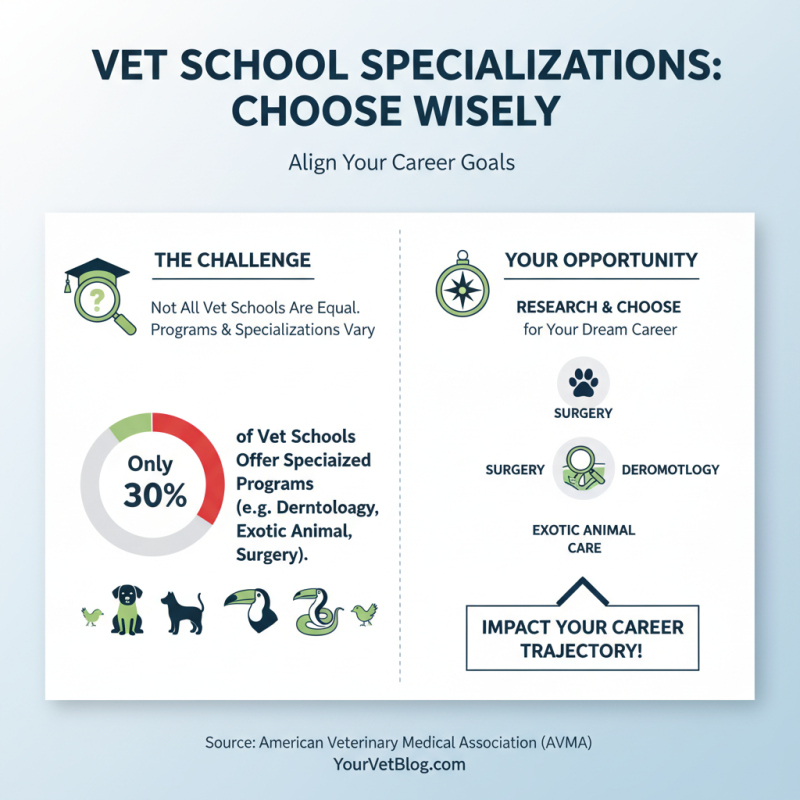
Choosing the right veterinary school is crucial for aligning with your career goals. Evaluating veterinary programs involves understanding specializations offered. Many aspiring veterinarians don't realize that not all schools provide the same opportunities. According to the American Veterinary Medical Association, only 30% of schools offer specialized programs in areas like dermatology, surgery, or exotic animal care. This can significantly impact your career trajectory.

When considering programs, look for accredited schools with a strong curriculum. Examine their partnerships with local clinics and hospitals. Hands-on experience is vital. Research indicates that students who engage in clinical rotations feel more prepared for real-world practice. You might find that the best programs also have robust mentoring systems, which can help you navigate challenges ahead.

Tip: Always visit the campus if possible. This allows you to meet faculty and current students. Their insight can be invaluable. Also, dive into the research work being done. Understanding faculty interests might help you find a supervisor who aligns with your future goals. Don’t hesitate to ask about job placement rates. This metric can often reveal the program’s effectiveness.

Assessing the Location and Facilities of Vet Med Schools

How to Choose the Best Vet Med School for Your Career Goals?

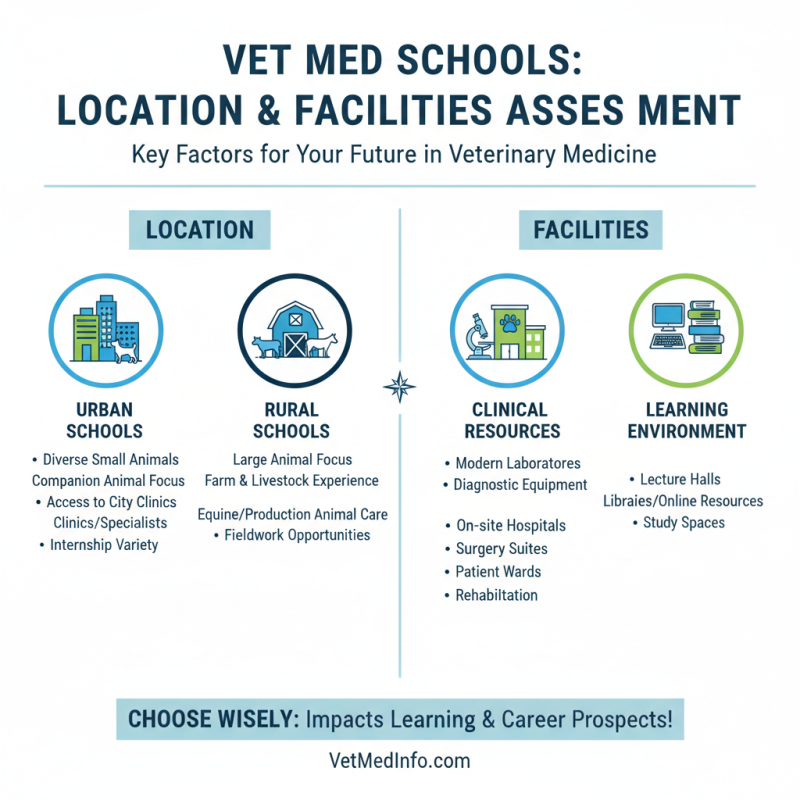
Choosing the right veterinary medicine school involves serious consideration of location and facilities. These factors can significantly affect your learning experience and career prospects. A school’s location impacts your access to diverse animal populations and potential internships. Urban schools often have a variety of species available, while rural schools might focus on large animal care.

Facilities play a critical role too. Modern labs and surgical suites can enhance your hands-on learning. Look for schools with advanced technology and resources. This access can bridge the gap between theory and practice, making it easier for you to develop your skills.

**Tips:** Visit campuses if possible. Check out libraries and clinics. Speak with current students about their experiences. If distances seem daunting, consider online resources offered by the school. It’s important to reflect on what specific facilities matter most for your focus within veterinary medicine. Don't rush your decision; a well-suited environment fosters success.

Understanding Admission Requirements and Financial Costs

Choosing the right vet med school requires careful consideration of admission requirements and financial costs. Understanding the prerequisites for each program is essential. Many schools expect a strong background in biology, chemistry, and physics. Some may also require specific courses, clinical experience, or volunteer work with animals. These prerequisites can vary significantly, so researching each school is crucial.

Financial costs are another major factor. Tuition can vary widely, and it often includes additional fees for equipment and materials. Students should also consider living expenses, which can add up quickly. Applying for scholarships or financial aid can help alleviate some of this burden. It's important to create a budget that accounts for all potential costs.

Reflection is key when choosing a school. Some applicants are attracted only to prestigious programs, but these may not align with their career goals. Others might overlook schools with strong support systems and lower costs. Finding the right fit is more than just rankings; it's about personal growth and professional readiness. Engaging with current students or alumni can provide insight into the true value of a program.

Exploring Career Outcomes and Alumni Networks in Veterinary Medicine

When choosing a veterinary medicine school, it's crucial to consider career outcomes. A report from the American Veterinary Medical Association (AVMA) reveals that veterinary graduates experience a diverse range of career paths. Approximately 60% enter private practice, while others work in research or public health. Understanding these trends can help students align their education with career aspirations.

Alumni networks also play a significant role in shaping future professionals. Schools with strong connections offer invaluable mentoring and opportunities. Data indicates that most job placements occur through networking. Engaging with alumni can provide insights into various specialties. This connection can help students identify options that fit their interests and skills.

However, not all programs guarantee success. Students might find it challenging to navigate their career path without proper guidance. Some institutions fail to provide sufficient networking opportunities. This shortfall can lead to uncertainty in job placements. Prospective students should evaluate a school's alumni engagement before making a choice. The right connections can significantly enhance a graduate's career trajectory in veterinary medicine.

Veterinary Medicine School Rankings Based on Career Outcomes