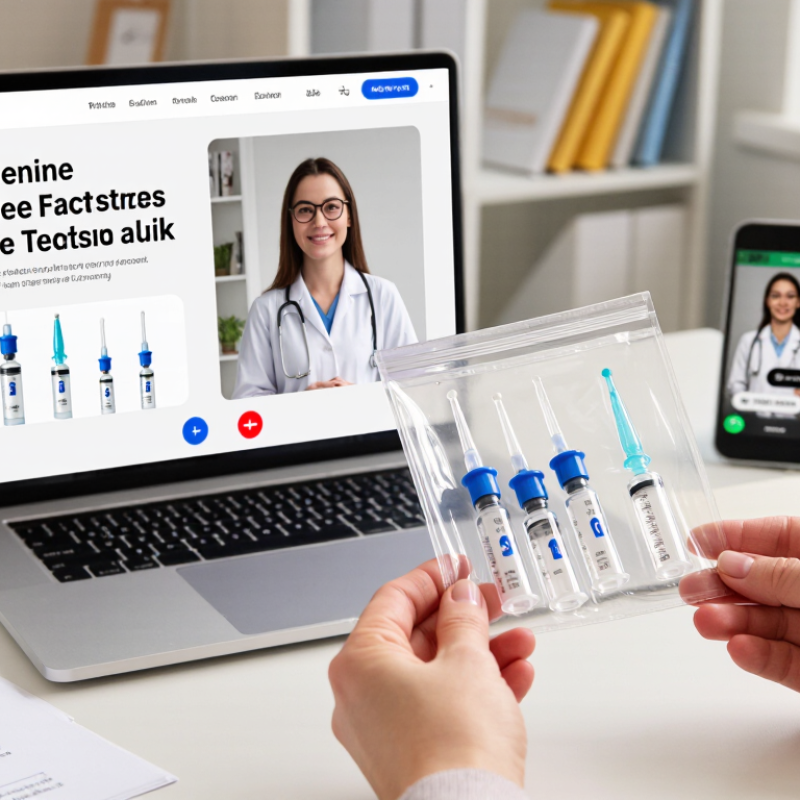
| Seller and pharmacy legitimacy | Use a licensed pharmacy or regulated medical-supply seller. Confirm that the website provides verifiable contact details, prescription requirements where applicable, and clear return and privacy policies. | Check that the shipping label and packing slip match the order and that the package does not show signs of tampering. | Do not use products from an unverifiable seller. Contact the seller or a pharmacist if the shipment is unexpected or incomplete. |
| Syringe capacity | Match the barrel capacity to the prescribed insulin dose. Common capacities include 0.3 mL, 0.5 mL, and 1 mL; the correct choice depends on the dose and syringe markings. | Confirm that the capacity printed on the box matches the order and that the graduation markings are clear and complete. | Ask a pharmacist or diabetes-care professional before changing capacity or measurement markings. |
| Insulin concentration compatibility | Verify that the syringe scale is intended for the insulin concentration prescribed. A syringe calibrated for one concentration must not be substituted for another without professional guidance. | Check the packaging and labeling for the intended concentration and compare it with the insulin instructions. | Do not estimate or convert doses independently. Contact a pharmacist if the concentration or scale is unclear. |
| Needle gauge and length | Select the gauge and needle length recommended for the individual’s insulin regimen and injection technique. A higher gauge number generally indicates a thinner needle. | Confirm the gauge and length on the box and inspect individual packages for intact needle covers. | Do not use a different needle specification without advice from a qualified healthcare professional. |
| Sterile packaging | Choose unused, individually packaged, sterile syringes from sealed medical packaging. | Look for punctures, tears, open seals, moisture, dirt, crushed packages, or missing protective caps. | Do not use any syringe with damaged or opened sterile packaging. Separate it from usable supplies and request a replacement. |
| Expiration and lot information | Confirm that the listing provides an expiration date or lot information when required by local regulations. | Check the expiration date, lot number, and labeling before opening the package. | Do not use expired, relabeled, or unreadable products. Keep the packaging if a quality report or return is needed. |
| Delivery condition | Use a delivery address where someone can receive the package promptly and keep medical supplies protected from weather. | Check for water exposure, extreme heat or cold, visible contamination, crushed cartons, and evidence that the parcel was opened. | Photograph damaged packaging before opening when possible, quarantine questionable items, and contact the seller or pharmacist. |
| Storage after arrival | Prepare a clean, dry, secure storage location away from children, pets, direct sunlight, and sources of heat. | Ensure boxes and individual wrappers are dry, intact, and free from visible contamination. | Store syringes in their original packaging at the temperature stated on the package, away from moisture and temperature extremes. Do not freeze them. |
| Use and reuse | Purchase enough new syringes for the prescribed injection schedule and follow local disposal requirements. | Confirm that each syringe is unused and that the needle is straight, capped, and undamaged. | Use each syringe only once unless a healthcare professional and local guidance explicitly state otherwise. Never share syringes. |
| Sharps disposal | Arrange an appropriate puncture-resistant sharps container before starting use. | Check that the container is upright, stable, leak-resistant, and not overfilled. | Place used syringes directly into the sharps container without bending, breaking, or recapping the needle unless local instructions require recapping. |