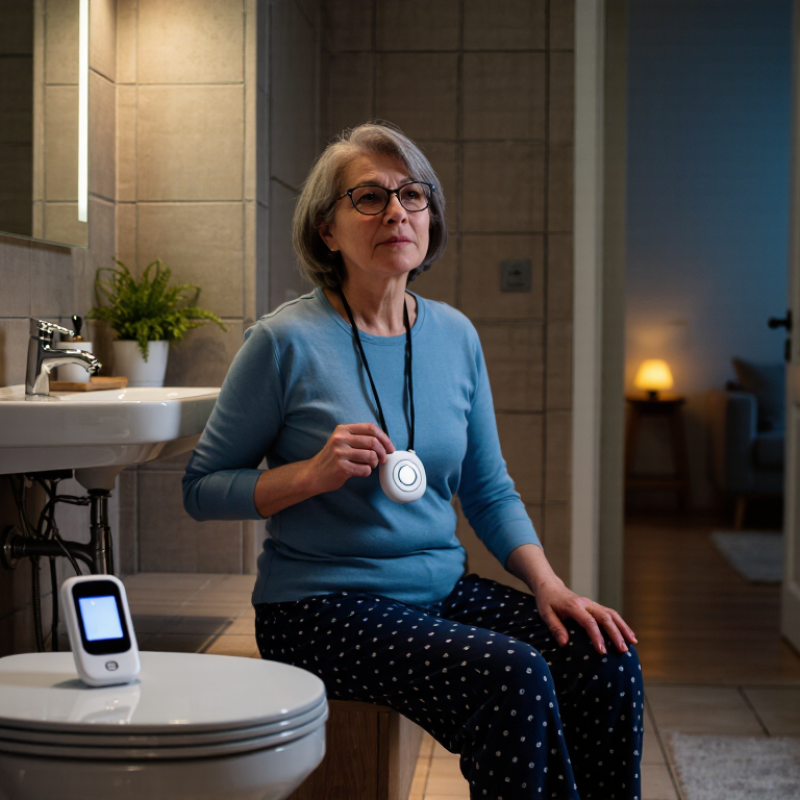
| Medical alert system | A combination of emergency communication devices and response services designed to help a person request assistance. | At-home, mobile, landline-based, cellular, or internet-connected systems. | It supports emergency response but does not replace medical care, supervision, or professional diagnosis. |
| Help button | A wearable or mounted button that starts an emergency call when pressed. | Pendant, wristband, wall button, or integrated device control. | The button should be easy to reach and simple to activate, including during stress or limited mobility. |
| Base station | A central communication unit that receives the alert signal and connects the user with a response center or contact. | Two-way speaker, microphone, backup battery, and connection status indicators. | The unit should be placed where it can be heard and reached from commonly used areas. |
| Mobile device | A portable alert device that allows a user to request help away from home. | Cellular connectivity, built-in speaker and microphone, GPS or location support, and rechargeable battery. | Coverage depends on the available cellular network, device charge, and outdoor or indoor conditions. |
| Automatic fall detection | A sensor-based feature intended to identify patterns that may indicate a fall and send an alert. | Motion sensors, accelerometers, algorithms, and optional user confirmation. | It may not detect every fall, and false alerts can occur. Pressing the help button remains important when possible. |
| Response center | A staffed service that receives alerts, communicates with the user, assesses the situation, and contacts appropriate help. | Trained response personnel, two-way communication, emergency protocols, and contact records. | Response procedures and availability vary by service plan and region. |
| Emergency contacts | Family members, caregivers, neighbors, or other designated people who may be contacted after an alert. | Contact names, phone numbers, access instructions, medical information, and preferred communication order. | Information should be updated whenever a contact, address, medication, or access arrangement changes. |
| Two-way communication | Allows the user and responder to speak through the device without using a separate telephone. | Hands-free speakerphone, microphone, volume controls, and audio prompts. | Clear audio is especially important for users with hearing or speech limitations. |
| Location information | Data that can help responders identify the user’s approximate position. | GPS, Wi-Fi positioning, cellular location, or a registered home address. | Indoor accuracy can be limited, and location features may depend on device settings and network availability. |
| Power and connectivity | The electrical power and communication links required for the system to send and receive alerts. | Rechargeable or replaceable batteries, cellular networks, landline connections, Wi-Fi, and battery backup. | Users should test the system regularly and follow charging and battery-replacement instructions. |
| Typical alert process | The sequence from activating the device to receiving assistance. | Press button or trigger detection; signal is transmitted; responder answers; situation is assessed; help is contacted. | A user should remain near the device when safe and clearly explain the emergency to the responder. |
| Best-fit user considerations | Factors used to determine whether a system suits a person’s needs and environment. | Fall risk, mobility, living arrangement, travel habits, hearing ability, coverage, and comfort with technology. | The system should be easy to wear, maintain, test, and use during a real emergency. |