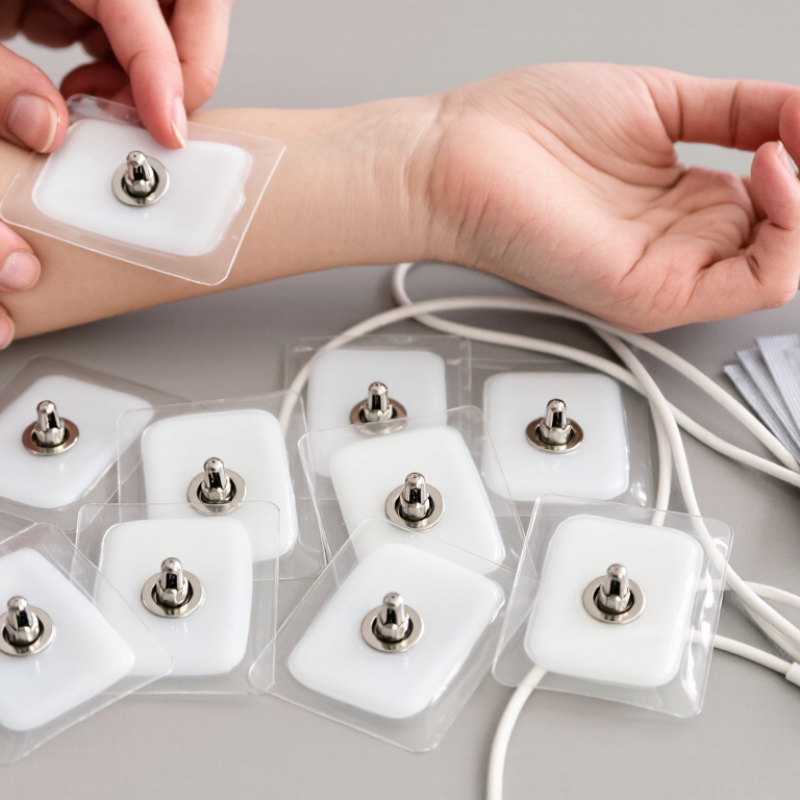
| Reusable TENS/EMS Pads | Deliver low-voltage electrical pulses through the skin for transcutaneous nerve or muscle stimulation. | Carbon film, conductive polymer, or metalized conductive fabric. | Usually rectangular, square, oval, or round; commonly about 3–10 cm per side or diameter. | Portable TENS and EMS devices, physiotherapy, sports recovery, and muscle stimulation. | Gel reusability, connector compatibility, skin adhesion, current distribution, and storage instructions. |
| Single-Use ECG/EKG Electrodes | Detect bioelectric signals generated by the heart for electrocardiographic monitoring. | Silver/silver-chloride sensing element with hydrogel or solid gel. | Commonly round or oval; adult monitoring sizes are often approximately 3–5 cm in diameter, depending on design. | Resting ECG, bedside monitoring, stress testing, ambulatory monitoring, and emergency care. | Signal quality, low skin impedance, radiolucency when required, connector type, biocompatibility, and expiry date. |
| EMG Surface Electrodes | Capture electrical activity produced by skeletal muscles without inserting a needle. | Ag/AgCl, conductive polymer, or conductive fabric. | Small circular or rectangular formats; size is selected according to the muscle and measurement protocol. | Muscle research, rehabilitation assessment, ergonomics, sports science, and biofeedback. | Stable baseline, low motion artifact, electrode spacing, cable shielding, and compatibility with the EMG acquisition system. |
| Defibrillation and Pacing Pads | Transfer high-energy defibrillation pulses or pacing current between a medical device and the patient. | Large-area conductive adhesive system, commonly using conductive gel and a metal or carbon-based electrode layer. | Large rectangular or rounded-rectangle pads; adult sets typically use broad chest-contact areas. | Manual defibrillators, automated external defibrillators, synchronized cardioversion, and transcutaneous pacing. | Device compatibility, energy rating, cable connection, shelf life, radiolucency, and compliance with applicable medical-device requirements. |
| Grounding and Reference Electrodes | Provide a reference or return path that helps complete the electrical circuit and reduce measurement interference. | Conductive rubber, carbon film, metalized fabric, or Ag/AgCl materials. | Available in small to large rectangular, circular, or oval formats. | Electrotherapy systems, physiological recording, laboratory instrumentation, and electrical safety setups. | Electrical resistance, surface contact area, cable or snap interface, flexibility, and compatibility with the equipment. |
| Hydrogel Adhesive Pads | Maintain skin contact while providing an ionically conductive interface between the skin and electrode. | Water-based polymer hydrogel, often combined with carbon, silver/silver-chloride, or another conductive layer. | Round, oval, square, and custom die-cut designs; dimensions depend on the application and target body area. | ECG monitoring, TENS, EMS, biofeedback, and other skin-contact electrical devices. | Hydration retention, peel strength, residue, skin comfort, drying resistance, and sealed packaging. |
| Dry Electrode Pads | Measure or transmit electrical signals without requiring a separate wet gel application. | Conductive textile, conductive silicone, carbon, stainless steel, or plated metal. | Flexible patches, textile panels, or compact rigid-contact designs. | Wearable sensors, long-duration monitoring, smart garments, fitness devices, and reusable research systems. | Contact stability, pressure dependence, motion artifact, washability, corrosion resistance, and reusable-life testing. |
| Specialty and Custom Electrode Pads | Support application-specific stimulation, sensing, or anatomical placement requirements. | Material selected according to conductivity, flexibility, biocompatibility, and manufacturing requirements. | Custom geometry, multi-zone layouts, thin-film patterns, or anatomically shaped pads. | Clinical research, wearable electronics, rehabilitation equipment, monitoring prototypes, and OEM medical devices. | Drawing approval, tolerances, adhesive validation, electrical testing, packaging, sterilization requirements, and regulatory documentation. |