China Top Animal Doctor Equipment Manufacturers?

China has become a significant source of veterinary equipment for clinics, hospitals, laboratories, and mobile practices. This guide explores China’s top animal doctor equipment manufacturers, with attention to product quality, clinical usability, and after-sales support.

The market includes anesthesia machines, patient monitors, ultrasound systems, dental units, surgical tables, sterilizers, infusion pumps, and laboratory analyzers. A reliable manufacturer should provide clear specifications, traceable quality records, practical training, and responsive technical service. Certificates alone are not enough. Buyers should examine testing procedures, warranty terms, replacement parts, and real clinic feedback.

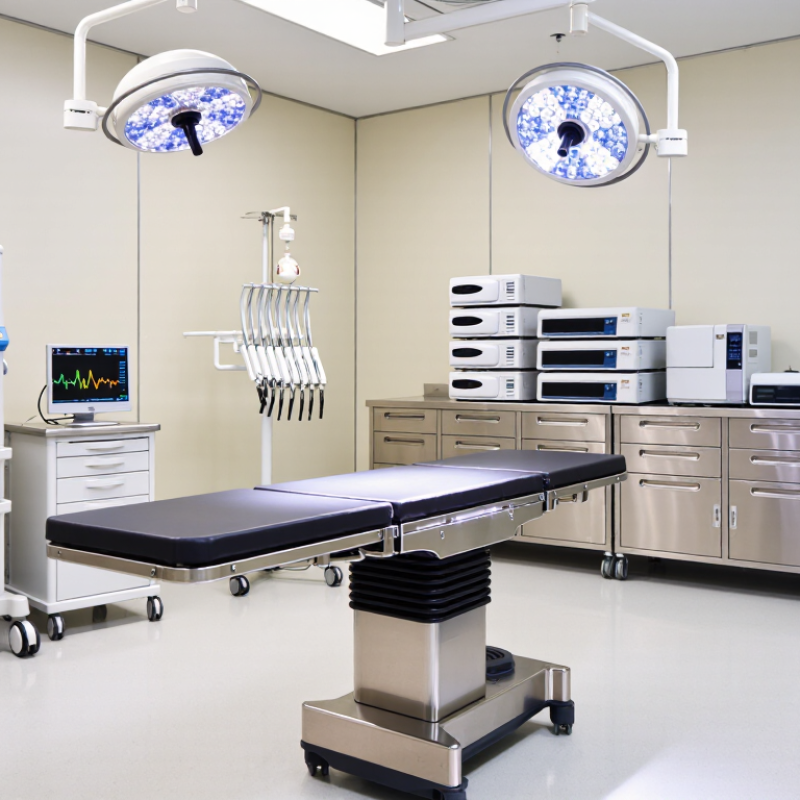
Small details matter. A monitor with readable alarms can reduce stress during surgery. A smooth stainless-steel table can simplify cleaning between patients. Weak manuals or delayed support can create serious problems.

Dr. Marty Becker, DVM, has said, “The human-animal bond is the foundation of veterinary medicine.” His view reminds us that equipment serves both clinical decisions and patient welfare. Technology should help an animal doctor notice changes earlier, work more safely, and communicate confidently with owners.

This review does not assume that the largest factory is the best choice. That would be too simple. Some manufacturers offer impressive catalogs but limited clinical guidance. Others may produce fewer devices while providing stronger customization and service. Buyers should compare documented performance, staff experience, regulatory compliance, and total ownership cost. The ranking may also require reflection, because supplier information can change quickly. A careful evaluation remains essential before placing any order.

China Top Animal Doctor Equipment Manufacturers?

China’s Leading Veterinary Equipment Manufacturers: An Industry Overview

China’s Leading Veterinary Equipment Manufacturers: An Industry Overview

China’s veterinary equipment sector serves companion-animal clinics, livestock farms, laboratories, and teaching hospitals. Demand is expanding with animal health awareness and larger clinical workloads. The 2024 China Pet Industry White Paper reported urban dog and cat consumption above RMB 270 billion in recent editions. Meanwhile, the National Bureau of Statistics recorded 96.63 million tonnes of meat production in 2023. These figures indicate broad demand for imaging, anesthesia, monitoring, laboratory, and surgical equipment.

Leading manufacturers usually combine domestic production with export-oriented quality systems. Strong suppliers provide ultrasound, digital radiography, oxygen concentrators, infusion pumps, and laboratory analyzers. They should offer calibration records, traceable testing, user training, and responsive maintenance. ISO 9001 or ISO 13485 certification can support process control, but certification alone proves little. Applicable IEC electrical-safety testing and market registration must also be checked. A low quotation may look efficient. It can later create costs through weak software, unavailable parts, or poor installation. That is where buyers often underestimate risk.

Tips: Request a complete specification sheet, service response time, warranty exclusions, and sample test results. Compare image clarity using the same animal model or phantom. Ask clinicians to inspect workflow, noise, probe durability, and cleaning access. Do not judge a manufacturer by factory size alone. Some smaller producers respond faster, though their documentation may need closer review. Verify every claim against independent records and practical demonstrations.

Core Categories of Veterinary Equipment Made in China

China’s veterinary equipment sector covers several practical categories, not one product group. Core supplies include digital X-ray systems, ultrasound scanners, anesthesia machines, surgical tables, patient monitors, centrifuges, laboratory analyzers, and rehabilitation equipment. Fortune Business Insights reported that the global veterinary equipment and supplies market reached about USD 2.05 billion in 2023. It also projects continued growth through 2032, driven by companion-animal care and livestock diagnostics.

Digital imaging remains a strong manufacturing category. Chinese factories commonly offer portable ultrasound units, wireless detectors, and compact radiography systems for clinics with limited space. Surgical equipment includes electrosurgical units, operating lights, instrument sets, and sterilization equipment. Monitoring products often measure oxygen saturation, blood pressure, temperature, and heart rate. These details matter during anesthesia. Small design faults can create serious clinical inconvenience.

Tips: Ask for ISO 13485 certification, calibration records, and electrical safety testing. Request sample images from imaging equipment. Check probe durability and software language before ordering. Grand View Research identifies diagnostics and monitoring as important veterinary market segments, but market reports cannot replace clinical trials. I would not treat a low quotation as proof of value. Verify spare-part availability, training, warranty terms, and service response times. Some catalogs look impressive, yet workflow testing may reveal awkward controls or unclear alarms.

Key Technologies Shaping China’s Animal Healthcare Equipment Market

China’s leading animal equipment manufacturers are moving beyond basic clinic hardware. Their strongest advantage is technology integration. Digital radiography now delivers clearer images with shorter exposure times. Portable ultrasound systems bring abdominal and cardiac examinations into smaller practices. According to MarketsandMarkets, the global veterinary imaging market was projected to grow from about USD 1.5 billion in 2023 to over USD 2.3 billion by 2028. China’s suppliers are competing within this expanding demand.

Artificial intelligence is becoming practical, though not magical. Software can highlight suspected lesions, measure organs, and support image archiving. It cannot replace a trained veterinarian’s judgement. Cloud-connected PACS platforms also help hospitals share scans between examination rooms and referral centres. Mordor Intelligence identifies digitalisation and remote access as important drivers in veterinary diagnostics. In China, manufacturers increasingly combine imaging, anaesthesia monitoring, infusion control, and electronic medical records in one workflow.

The details matter.

Reliable suppliers focus on sensor calibration, battery stability, infection-resistant surfaces, and simple interfaces. Many also build products around ISO 13485 quality systems and applicable IEC 60601 safety principles. Field experience shows a weakness: advanced software may struggle with poor images or limited training data. Rural clinics need durable equipment, local servicing, and clear manuals more than impressive demonstrations. The best Chinese manufacturers are therefore judged by uptime, clinical validation, training response, and transparent technical support. Fancy features help, but dependable engineering matters more.

Key Technologies Shaping China’s Animal Healthcare Equipment Market

Comparative technology relevance index based on documented use in veterinary diagnostics, livestock disease prevention, and farm biosecurity. The index is an analytical benchmark rather than company or brand sales data.

Interpretation: Digital imaging, rapid molecular diagnostics, automated monitoring, and cold-chain systems are becoming increasingly important as China expands disease surveillance, precision livestock management, and preventive animal healthcare. Data dimensions reflect established equipment technology categories used across veterinary clinics, farms, laboratories, and animal health facilities.

How to Evaluate Chinese Veterinary Equipment Manufacturers

Evaluating Chinese veterinary equipment manufacturers requires more than comparing prices or reading polished catalogs. Start by checking the factory’s production experience, engineering team, and quality management records. Ask for traceability documents, material specifications, and test reports for each model. A dependable manufacturer should explain how equipment is calibrated, cleaned, packaged, and maintained.

Inspect the product in practical conditions. For a veterinary operating table, examine its height adjustment, locking system, surface drainage, and weight capacity. For imaging equipment, request image samples from different animal sizes and ask about radiation protection procedures. Product certifications should match the destination market, not simply appear as scanned certificates. Independent testing and clear technical files provide stronger evidence.

Communication also reveals competence. Technical answers should be specific, measured, and consistent across sales and engineering staff. Ask about spare parts, repair response times, software updates, and operator training. A factory visit can reveal uncomfortable details, such as poor labeling or unfinished inspection records. These issues do not always mean failure, but they deserve written corrective actions.

Do not rely on one sample. Test several units under repeated workloads and record defects honestly. A supplier may perform well during a demonstration yet struggle after installation. I would also verify customer references from clinics with similar animal volumes. The evaluation is rarely perfect, because every manufacturer has limitations. What matters is whether those limitations are visible, documented, and responsibly managed.

Global Distribution, Compliance, and After-Sales Support in China

China’s Top Animal Doctor Equipment Manufacturers: Global Distribution, Compliance, and After-Sales Support in China

Reliable Chinese veterinary equipment manufacturers combine production experience with export discipline. Their teams should understand clinics, laboratories, and mobile animal-care units. Ask for clear technical files before placing a large order. These files may include test reports, risk assessments, user manuals, and traceability records. Product compliance depends on the destination market and equipment category. Electrical devices may require safety and electromagnetic compatibility testing. Diagnostic products may need additional registration or performance evidence. Do not treat one certificate as global approval.

Global distribution requires more than shipping cartons overseas. Experienced suppliers coordinate packaging, customs documents, spare parts, and delivery schedules. A practical supplier can provide serial-number records for each shipment. Crated equipment should arrive with shock indicators and moisture protection. Installation instructions should match the local language and power system. Distributor training also matters. A short video cannot replace hands-on calibration practice.

After-sales support often determines the real value of veterinary equipment. Look for defined response times, remote troubleshooting, repair procedures, and warranty terms. Local service partners can reduce downtime when a monitor fails during surgery. Suppliers should stock common sensors, cables, batteries, and replacement modules. Ask how software updates are controlled and documented. No supplier gets every detail right. Some promises sound impressive but lack measurable service targets. That gap deserves scrutiny before contracts are signed. Feedback from working veterinarians can reveal weaknesses that factory demonstrations hide.

China Top Animal Doctor Equipment Manufacturers? - Global Distribution, Compliance, and After-Sales Support in China

Equipment Category Typical Veterinary Applications Common International Compliance References Key Export Documentation Global Distribution Requirements Recommended After-Sales Support
Patient Monitoring Systems Monitoring of ECG, SpO₂, non-invasive blood pressure, temperature and respiration during surgery or recovery. IEC 60601-1 may apply to electrical safety; IEC 60601-1-2 is commonly referenced for electromagnetic compatibility; ISO 13485 is used for quality-management systems. User manual, declaration of conformity where applicable, electrical safety test report, packing list, commercial invoice and certificate of origin. Local importer or distributor, destination-country registration review, multilingual labeling and stable supply of sensors and cables. Remote troubleshooting, calibration guidance, replacement accessories and technician training for alarm settings and preventive maintenance.
Veterinary Anesthesia Machines Inhalational anesthesia delivery, oxygen supply, ventilation and breathing-circuit management for small and large animals. IEC 60601-1 may be relevant for electrical safety; ISO 5358 is a recognized reference for anesthetic machines; applicable gas-system and local safety rules must be checked. Gas-flow test results, pressure test records, user instructions, spare-parts list, conformity documents and shipping classification information when required. Compatibility with local oxygen sources, approved gas connectors, trained distributors and access to breathing bags, circuits, valves and vaporizers. Installation verification, leakage testing, annual servicing guidance and rapid replacement of consumable breathing-system parts.
Veterinary Ventilators Controlled or assisted ventilation for anesthetized, critically ill or post-operative animals. IEC 60601-1 and IEC 60601-1-2 are commonly considered for electrical safety and EMC; performance and labeling requirements vary by market. Performance test data, alarm verification, software version record, user manual, conformity documentation and service instructions. Local respiratory-therapy support, compatible circuits and filters, software or firmware control, and trained technical personnel. Preventive maintenance schedule, alarm calibration, loaner or replacement policy and remote support for configuration problems.
Ultrasound Diagnostic Systems Abdominal, cardiac, reproductive, musculoskeletal and emergency imaging for companion and farm animals. IEC 60601-1 and IEC 60601-1-2 may apply to electrical safety and EMC; acoustic-output and transducer safety should be reviewed for the intended use. Probe specifications, image-quality test report, electrical safety documentation, software information, manual and export packing documents. Regional application specialists, probe protection during transport, local training and access to compatible probes and gel. Image-quality support, probe inspection, software maintenance, online application training and repair or exchange procedures.
Surgical Tables and Operating Lights Positioning, illumination and workflow support for orthopedic, soft-tissue, dental and emergency procedures. IEC 60601-1 may apply to powered equipment; IEC 60601-2-41 is commonly associated with surgical and diagnostic luminaires where applicable. Load-capacity data, movement and stability test records, electrical test report, installation guide, spare-parts list and conformity documents. Pre-installation site assessment, local electrical compatibility, doorway and freight planning, and trained installation partners. On-site installation, actuator and braking-system inspection, lighting-module replacement and access to table pads and accessories.
Veterinary Dental Units Dental examination, scaling, polishing, suction, air supply and minor oral procedures. Electrical safety and EMC requirements may apply; compressed-air, water-quality, handpiece and local infection-control requirements should be verified. Operating manual, air and water specifications, electrical safety report, accessory list, conformity documentation and maintenance instructions. Availability of handpieces, scaler tips, filters and tubing; distributor capability for installation and operator training. Consumables forecasting, handpiece servicing, waterline cleaning guidance and technical support for pressure or suction faults.
Steam Sterilizers Sterilization of reusable instruments, dental tools and selected surgical accessories. EN 13060 is widely used for small steam sterilizers in applicable markets; ISO 17665 is a key reference for moist-heat sterilization processes. Cycle-performance records, pressure-vessel documentation where required, electrical test report, validation guidance and user manual. Local water-quality assessment, electrical and plumbing compatibility, qualified installation and availability of seals, filters and printer paper. Routine biological or chemical indicator guidance, chamber inspection, gasket replacement and documented service intervals.
Cages, Kennels and Hospital Furniture Animal housing, recovery, isolation, boarding, examination and treatment-room organization. Material safety, cleanability, mechanical stability, corrosion resistance and local workplace-safety requirements are the principal review areas. Material specifications, load ratings, assembly instructions, cleaning guidance, inspection records and packing documentation. Flat-pack or modular shipping, replacement panels and latches, dimensional compatibility with the facility and local assembly support. Replacement hardware, surface-repair guidance, cleaning recommendations and clear procedures for warranty claims.
Compliance note: Regulatory obligations depend on the product classification, intended use, electrical design and destination market. Buyers should verify applicable requirements with the importer, competent authority or qualified regulatory consultant before placing an order.