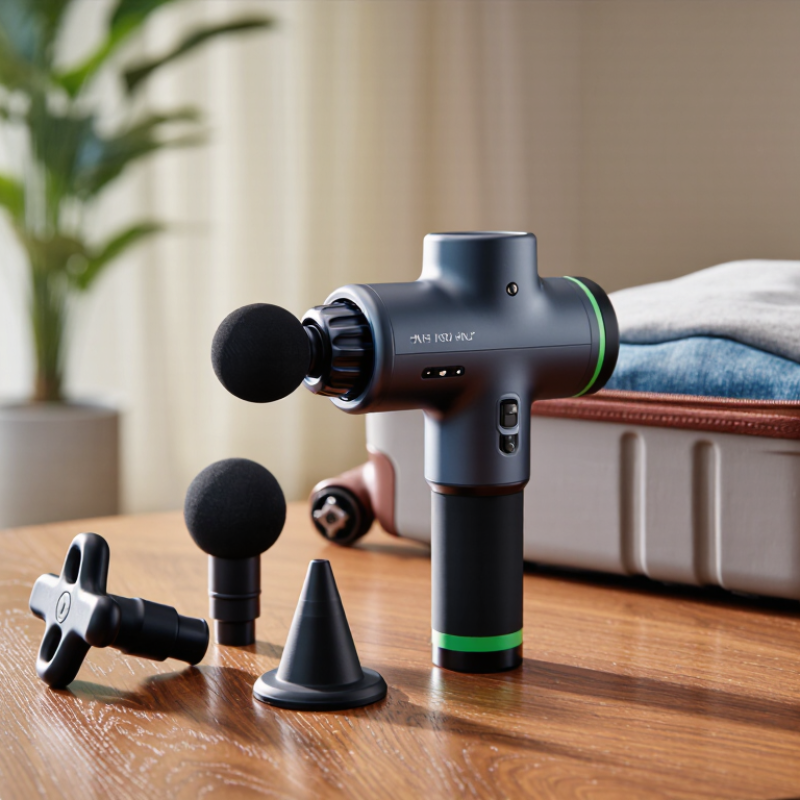
| Definition | A travel massage gun is a compact, battery-powered percussive therapy device designed to deliver repeated mechanical pulses to soft tissue. | It is generally used for temporary muscle relaxation, warm-up support, and post-activity comfort rather than for diagnosing or treating a medical condition. | Choose a lightweight model with a protective case, secure controls, and a removable or clearly rated rechargeable battery when possible. |
| How it works | An electric motor moves an internal shaft back and forth, driving a soft attachment into the body at a selected speed and force. | The repeated motion can temporarily increase local stimulation and may reduce the sensation of muscle tightness. | Use slow, controlled passes on large muscle groups. Do not press aggressively or keep the device stationary on one spot for an extended period. |
| Common operating controls | Typical controls include a power button, several speed levels, and sometimes a pressure or battery indicator. | Lower settings are easier to control and are usually appropriate when starting a session or using the device near sensitive areas. | Turn the device off before placing it in a bag. Prevent accidental activation by using a travel lock, case, or separate protective pouch. |
| Typical session duration | A practical starting point is about 30 seconds to 2 minutes per muscle area, with a short overall session. | Longer or harder use does not necessarily provide greater benefit and can cause soreness, bruising, skin irritation, or numbness. | Stop if sharp pain, tingling, unusual weakness, dizziness, significant swelling, or skin discoloration occurs. |
| Suitable body areas | Large, fleshy muscles such as the quadriceps, hamstrings, calves, glutes, and upper back are generally more suitable targets. | Soft muscle tissue provides more cushioning and control than bony or highly sensitive areas. | Keep the device away from the front and sides of the neck, head, spine, joints, kidneys, throat, and areas with open skin or active inflammation. |
| Areas to avoid | Avoid direct use over bones, the spine, the front of the neck, the head, major blood vessels, varicose veins, wounds, rashes, and recently injured tissue. | Direct percussion in these locations may increase pain or tissue injury and is not a substitute for clinical assessment. | Use only around, not directly over, a painful or injured area unless a qualified healthcare professional has advised otherwise. |
| Major contraindications | Do not use without medical clearance if you have a suspected fracture, acute muscle tear, severe sprain, unexplained severe pain, active bleeding, or a recent operation. | Percussion may aggravate damaged tissue or interfere with recovery. | Seek medical advice before travel if symptoms are new, severe, worsening, or associated with loss of function. |
| Blood-clot and bleeding risk | Do not use over a suspected or confirmed deep-vein thrombosis, blood clot, or an area with significant swelling, warmth, and redness. | Mechanical stimulation could be unsafe when a clot or abnormal bleeding risk is present. | People taking anticoagulants, living with a bleeding disorder, or who bruise easily should obtain individual medical advice before use. |
| Pregnancy and medical conditions | People who are pregnant or who have conditions affecting circulation, sensation, bones, nerves, or healing should consult a healthcare professional first. | Reduced sensation may make it difficult to detect excessive pressure or tissue damage. | Do not use on the abdomen during pregnancy unless specifically directed by a qualified clinician. |
| Battery rating formula | Watt-hours (Wh) = battery voltage (V) × ampere-hours (Ah). If the label lists milliamp-hours, divide mAh by 1,000 before calculating. | Example: a 14.8 V battery rated at 2.0 Ah equals 29.6 Wh. | Check the battery label, user manual, or manufacturer documentation before flying. Do not estimate the rating from physical size alone. |
| TSA and U.S. aviation battery threshold | Spare lithium-ion batteries rated at 100 Wh or less are generally permitted in carry-on baggage without airline approval under standard U.S. aviation rules. | The 100-Wh limit applies to the battery’s energy rating, not to the massage gun’s motor power or charging speed. | Keep spare or removable lithium batteries in carry-on baggage and protect terminals from short circuits. |
| Batteries above 100 Wh | Spare lithium-ion batteries above 100 Wh and up to 160 Wh may require airline approval and are generally limited in quantity; batteries above 160 Wh are not permitted for passenger air transport. | Airline rules can be more restrictive than the baseline aviation standard. | Contact the operating airline before departure if the battery exceeds 100 Wh. Do not rely on airport screening staff to approve an undocumented battery. |
| Installed battery versus spare battery | A battery installed inside a device is treated differently from a spare battery, but carry-on transport is the preferred option for portable electronic devices. | Carry-on baggage allows the device to be monitored and reduces the risk associated with damage or overheating in the aircraft hold. | Carry the massage gun in hand luggage whenever practical. If an airline permits checked transport, switch the device completely off and protect it from accidental activation or damage. |
| Airport security screening | Security officers have final authority to decide whether an item may pass through a checkpoint. | A device that meets a battery rule may still require additional inspection. | Remove the massage gun from its case if requested, keep battery specifications accessible, and check the current rules for the departure and transit airports. |
| Charging safety | Use the supplied or manufacturer-approved charger and inspect the battery, cable, and housing for damage before charging. | Damaged, swollen, unusually hot, leaking, or smoking lithium batteries can present a fire hazard. | Do not charge a damaged battery or leave the device charging unattended. Unplug it when fully charged and keep it away from heat and moisture. |
| International travel | Battery and security requirements may vary by country, airline, airport, and aircraft type. | Meeting a U.S. TSA guideline does not automatically guarantee acceptance on an international itinerary. | Confirm the rules with every operating airline, especially for codeshare flights, connections, and destinations with separate aviation regulations. |
| Recommended travel checklist | Confirm the Wh rating, pack the device securely, protect battery terminals, carry documentation, and verify airline requirements. | Preparation reduces delays at screening and helps prevent battery damage. | Keep the massage gun accessible in carry-on baggage, fully powered off, and separated from liquids or objects that could press its controls. |