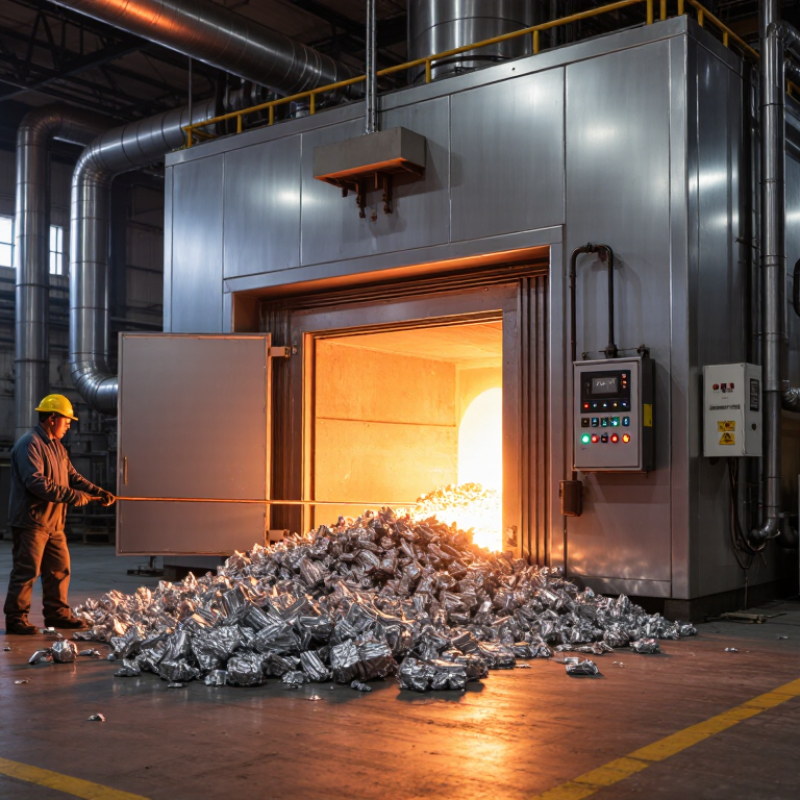
| Aluminum melting temperature | Pure aluminum melts at approximately 660.3°C (1,220.5°F). | A purpose-built furnace supplies controlled heat above the melting point while limiting oxidation and unnecessary energy loss. | Solid scrap is converted into liquid metal that can be cast into new ingots, billets, slabs, or components. |
| Energy requirement | Producing aluminum from recycled scrap generally requires about 5% of the energy needed to produce primary aluminum from ore, although actual furnace consumption varies. | Efficient melting reduces fuel or electricity use per tonne of usable metal. | Lower energy demand supports resource conservation and reduces the carbon intensity of aluminum production. |
| Potential emissions reduction | Recycling aluminum can reduce production-related greenhouse-gas emissions by approximately up to 95% compared with primary production, depending on the energy mix and process configuration. | A well-controlled furnace improves thermal efficiency and can reduce the emissions associated with each recycled tonne. | More metal can remain in circulation without repeating the energy-intensive extraction and refining route. |
| Suitable scrap forms | Common feedstocks include extrusion offcuts, casting returns, sheet scrap, beverage-can scrap, machining chips, and end-of-life aluminum parts. | Different scrap sizes, coatings, moisture levels, and alloy compositions require appropriate charging and melting practices. | A flexible furnace can help recover both manufacturing scrap and post-consumer material that might otherwise be discarded. |
| Charge preparation | Sorting, sizing, removing excessive dirt, and drying wet scrap are essential before charging the furnace. | Prepared scrap melts more consistently and lowers the risk of explosions, excessive dross, and unstable furnace operation. | Better preparation improves material yield and helps preserve the value of recovered aluminum. |
| Oxidation and dross control | Molten aluminum reacts with oxygen and forms dross; the amount depends on scrap type, temperature, turbulence, holding time, and furnace design. | Reduced turbulence, suitable temperature control, and timely dross removal help increase metal recovery. | Higher recovery means less primary aluminum is needed to replace processing losses. |
| Furnace selection | Common furnace categories include crucible, reverberatory, rotary, induction, and electric resistance furnaces. | The best choice depends on batch size, scrap density, alloy requirements, fuel availability, desired melt rate, and environmental controls. | Matching furnace technology to the material stream improves the economic feasibility of local recycling loops. |
| Alloy management | Aluminum alloys contain different amounts of elements such as silicon, magnesium, copper, manganese, and zinc. | Chemical analysis and separated scrap streams are needed when the final product requires a specific alloy composition. | Accurate alloy control allows recycled metal to return to demanding applications instead of being downgraded. |
| Metal quality | Quality depends on scrap cleanliness, alloy separation, melt temperature, treatment, filtration, and contamination control. | A controlled melting process helps produce consistent metal suitable for casting or further processing. | Reliable quality strengthens closed-loop recycling and reduces the need for virgin alloy additions. |
| Material durability | Aluminum can be recycled repeatedly without losing its basic metallic properties, provided alloy composition and contamination are properly managed. | Melting restores scrap to a usable raw-material form rather than merely reducing its volume. | Recycling supports repeated use of the same material stock and reduces dependence on new mineral extraction. |
| Operational safety | Wet scrap, sealed containers, hazardous coatings, and unknown materials can create serious risks when charged into molten metal. | Drying, inspection, ventilation, protective equipment, and documented charging procedures are essential for safe operation. | Safe recycling systems improve long-term reliability and support responsible recovery of aluminum resources. |