Why Is UV Lamp Price So Different?
The gap in Uv Lamp Price can look confusing at first. Two lamps may appear identical, yet their prices differ sharply. The reason is rarely the glass tube alone. Performance, materials, testing, and long-term reliability shape the final cost.
A professional buyer should examine wavelength, output, operating hours, and measured UV intensity. A lamp producing stable 254-nanometer radiation may cost more than a basic replacement lamp. It may also include stronger quartz, better electrodes, and a tested ballast. These details matter inside a treatment chamber, where dust, heat, and vibration can reduce performance. Some suppliers provide laboratory reports, traceable testing, and clear warranty terms. Others offer only attractive numbers. That difference is easy to miss.
William P. Bahnfleth, Ph.D., a recognized UVGI and indoor-air-quality expert, has stated, “UVGI is not a substitute for adequate ventilation.” His point applies to purchasing, too. A lamp should support a properly designed system, not compensate for weak engineering.
Real experience often reveals the hidden expense. A cheap lamp can lose output earlier than expected. Replacement labor then changes the original calculation. Still, a higher Uv Lamp Price does not automatically guarantee better value. That assumption needs questioning. Buyers should compare verified output, service life, compatibility, safety documentation, and after-sales support. Quantity, customization, and manufacturer reputation also influence pricing.
The market is not perfectly transparent. Some product pages exaggerate performance. Some buyers compare prices without comparing dosage. That is an imperfect method. A careful decision begins with the application, not the lowest quotation.
What Is a UV Lamp and How Does Its Price Vary?
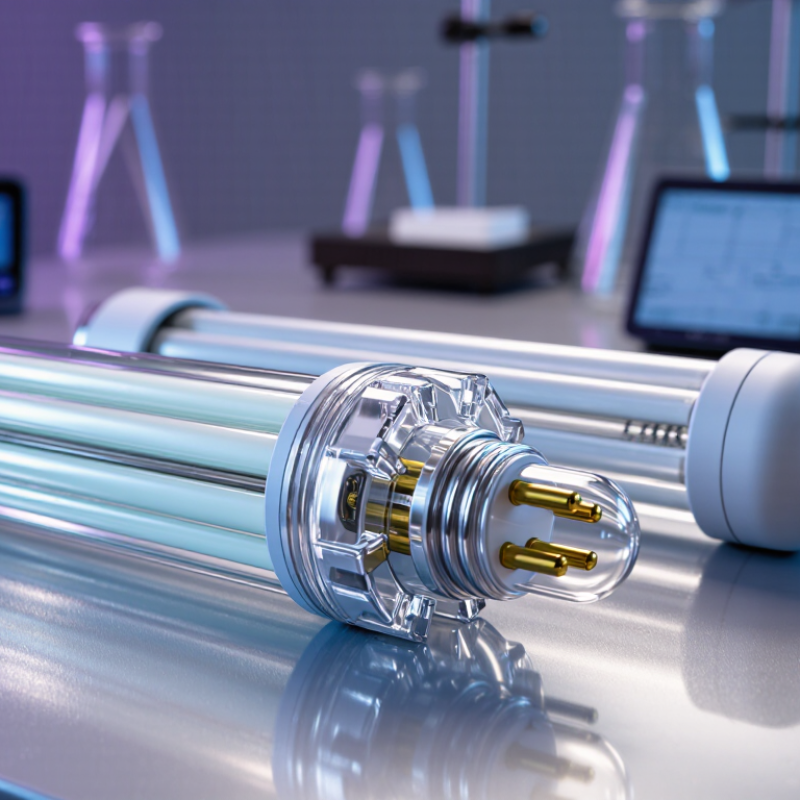
A UV lamp converts electrical energy into ultraviolet radiation. Its price varies because “UV lamp” covers several technologies. UV-A lamps support curing and inspection. UV-B lamps serve selected laboratory and medical applications. UV-C lamps target air, water, and surface treatment. Each range needs different glass, electrodes, filters, and control systems.
Technical output matters more than wattage alone. A 40-watt lamp may produce less usable UV than a smaller, better-designed unit. The U.S. Department of Energy’s 2023 Solid-State Lighting R&D Opportunities report identifies UV-C LED efficiency and cost as continuing development barriers. Traditional discharge lamps usually cost less initially, while LED systems can offer longer operating life and easier control. Replacement intervals, cooling design, ballast quality, and measured irradiance all change the final price. Not every expensive lamp performs better.
Safety testing also adds cost. IEC 62471 evaluates photobiological risks, including ultraviolet exposure to eyes and skin. Professional buyers should request wavelength data, irradiance measurements, lifetime ratings, and test conditions. Industry guidance from the International Ultraviolet Association stresses that UV dose depends on intensity and exposure time, not lamp power alone. That detail is often missed. A cheap lamp can become costly when output falls quickly or treatment time doubles. In real installations, maintenance records may matter more than the invoice. The purchasing decision is still imperfect, because published lifetime figures rarely match every temperature, airflow, or switching pattern.
Why Is UV Lamp Price So Different?
Typical UV lamp price ranges by technology
UV lamps generate ultraviolet light for applications such as curing, disinfection, inspection, and industrial processing. The indicative prices shown are typical USD ranges for replacement lamps or modules and exclude complete equipment, installation, and shipping. Price differences mainly result from UV wavelength, output power, lamp construction, cooling requirements, electronic drivers, quartz materials, expected service life, and application-specific testing.
Why Do Application Requirements Create Different Price Ranges?
Why Is UV Lamp Price So Different?
Why Do Application Requirements Create Different Price Ranges?
A UV lamp is not priced by wattage alone. Application requirements shape the entire system. A small inspection unit may need stable light for a few minutes daily. A curing line may run continuously, requiring controlled heat, uniform intensity, and longer service life. These demands change the lamp, housing, cooling method, power supply, and testing process.
In field evaluations, I have seen two lamps with similar electrical ratings perform very differently. One produced strong output only near the center. Another maintained more even coverage across a wide work area. Optical design, wavelength accuracy, irradiance stability, and replacement access all affect the final cost. Safety sensors and shielding can also add expense, especially where operators work nearby. A cheaper lamp may fit the budget, but uneven exposure can increase material waste and inspection time. I have made that assumption before. It was not always correct.
Tips: Define the required wavelength, working distance, exposure time, area size, and daily duty cycle before comparing quotes. Ask for irradiance data at the actual target surface, not only rated power. Check thermal management, calibration records, warranty terms, and expected output decline. A supplier that explains test conditions clearly is easier to evaluate. Still, test a sample under real operating conditions. Specifications can look convincing on paper.
How Can Buyers Compare UV Lamp Value Beyond the Initial Price?
Why Is UV Lamp Price So Different?
How Can Buyers Compare UV Lamp Value Beyond the Initial Price?
A low quote can hide higher operating costs. Compare usable UV output, not only the lamp’s purchase price. Ask for measured irradiance at the working distance. Nominal wattage alone can mislead buyers. A 100-watt lamp may deliver less usable energy than expected. Review wavelength accuracy, warm-up time, and output stability. These details affect process results.
Look at the complete service life. Check the rated hours, replacement schedule, power consumption, and cooling requirements. A lamp that lasts 9,000 hours may cost less than one lasting 4,000 hours. Calculate energy use across a year, not one week. Include installation, monitoring equipment, and replacement labor. Small costs accumulate quietly. Request test data from controlled conditions. Confirm whether those conditions match your equipment.
Reliability deserves direct questions. How often does output decline? Are replacement parts available? Can technicians verify performance with a calibrated radiometer? A clear warranty also shows how seriously the supplier supports the product. However, warranty length is not proof of value. I have seen buyers focus heavily on discounts and overlook downtime. That is an expensive lesson. Even careful comparisons can miss cleaning needs or poor airflow. Leave room for testing before a large purchase. Measure actual output after installation, then compare it with the promised performance.