What Are China Top Animal Hospital Care Suppliers?
China’s animal healthcare market has expanded beyond basic cages and surgical tools. Today, leading suppliers support diagnostics, anesthesia, imaging, laboratory testing, and infection control. Their products influence daily decisions inside a care animal hospital, from a puppy’s first examination to a complex orthopedic procedure.
This article examines China’s top animal hospital care suppliers through practical and evidence-based criteria. We consider product quality, manufacturing experience, certification, clinical usability, technical support, and after-sales service. Reliable suppliers should provide clear specifications, traceable materials, training records, and responsive maintenance. A microscope that produces sharp images matters. So does a technician who answers quickly when the screen fails during a busy afternoon.
Supplier reputation also requires careful review. Company websites may present impressive data, yet independent verification is still important. Customer references, product testing, regulatory documentation, and hospital feedback can reveal gaps. No ranking is perfect. Some claims remain difficult to confirm, especially when information changes quickly. That uncertainty deserves attention, not convenient assumptions.
The following overview introduces notable Chinese suppliers and explains where each may fit. Some serve large veterinary groups, while others support small clinics with practical equipment. Readers should compare their own clinical needs, budget, staff training, and local compliance requirements. The best choice is rarely the cheapest option. It is the supplier that combines dependable performance with responsible support, clear communication, and evidence that can withstand professional review.
What Defines a Leading Animal Hospital Care Supplier in China?
A leading animal hospital care supplier in China is defined by dependable clinical support, not a large catalogue. It understands how veterinarians work through busy mornings, emergency calls, and repeated sterilization cycles. Products should arrive with clear instructions, batch records, and stable packaging. Small details matter. Suppliers must also evaluate equipment safety, usability, and cleaning performance before recommending solutions to hospitals.
Reliable suppliers show technical competence through documented testing, trained service teams, and responsive troubleshooting. They can explain material choices, operating limits, maintenance intervals, and cleaning requirements in plain language. For consumables, traceability should connect each shipment to production records and quality checks. For equipment, installation guidance and calibration support can reduce avoidable clinical errors. A serious supplier also respects Chinese regulations and the destination market’s applicable requirements.
In practice, purchasing teams should request samples, inspect seals, test usability, and ask for references from comparable hospitals. A supplier may pass an audit yet fail when a replacement part is urgently needed. That weakness is easy to overlook. Communication speed, honest lead times, and after-sales accountability reveal more than polished brochures. No supplier is flawless. What matters is whether it admits limitations, corrects defects, and records preventive actions. Quarterly reviews should examine delivery accuracy, service response, and recurring defects.
Key Product Categories for Animal Hospital Care
China’s animal hospital care suppliers increasingly cover complete product categories, not only basic cages or surgical tools. Diagnostic equipment remains central, including hematology analyzers, chemistry analyzers, ultrasound systems, digital radiography, and microscope-based testing. These tools help veterinarians examine a tired dog, a cat with pale gums, or a rabbit with breathing problems quickly.
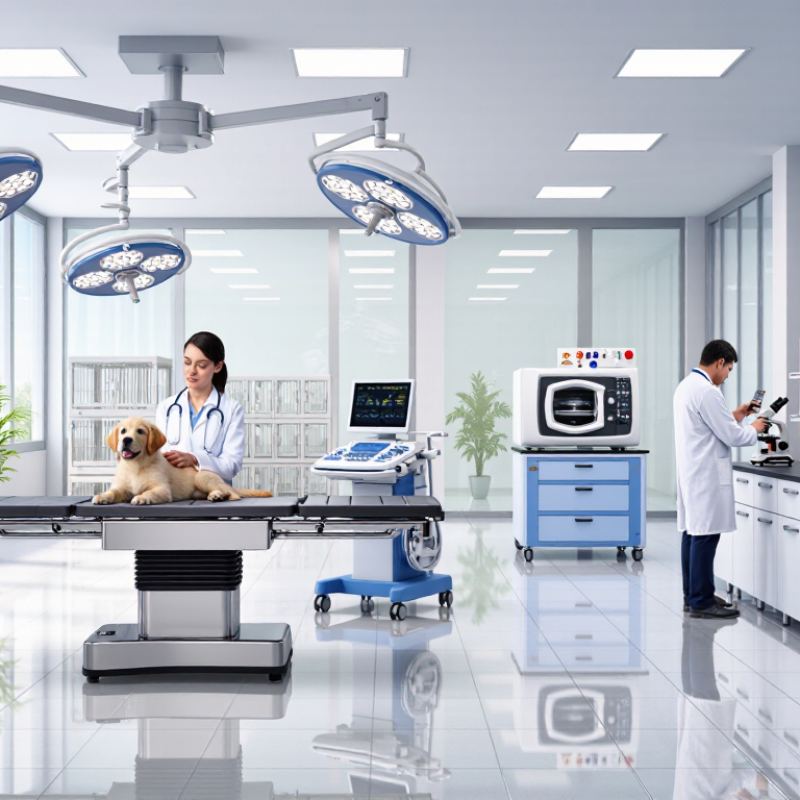
Surgical and critical-care supplies form another major category. Hospitals typically require operating tables, anesthesia machines, ventilators, infusion pumps, patient monitors, oxygen concentrators, and sterilization equipment.
Disposable items matter too: syringes, gloves, catheters, wound dressings, and specimen containers must remain consistent.
The American Pet Products Association reported that U.S. pet industry spending reached about 152 billion dollars in 2024, showing the scale of demand for professional animal care. Grand View Research also identifies diagnostics, monitoring, and surgical equipment as important segments in the veterinary equipment market. However, market reports use different definitions. Direct comparisons can be imperfect.
Tips: Evaluate suppliers through ISO documentation, product traceability, calibration records, warranty terms, and after-sales training. Request sample testing before large orders. A low price is not always efficient. Check cleaning access, alarm visibility, replacement-part availability, and compatibility with existing systems. Some product catalogs look impressive, yet their instructions may be unclear under emergency pressure. Hospitals should also confirm local registration and import requirements before purchasing.
Major Supplier Types and Manufacturing Capabilities
China’s leading animal hospital care suppliers usually fall into several practical groups. Integrated medical equipment manufacturers produce examination tables, surgical lights, anesthesia units, sterilizers, and recovery cages. Specialized factories focus on diagnostic devices, laboratory analyzers, imaging accessories, or stainless-steel hospital furniture. Consumable suppliers provide syringes, wound-care products, protective clothing, and disposable surgical materials.
Manufacturing capability matters more than a large catalog. Reliable suppliers should show controlled assembly lines, material records, equipment testing, and batch traceability. Stainless-steel workshops may offer laser cutting, welding, polishing, and customized cage dimensions. Electronics manufacturers often support prototype development, software adjustment, calibration, and small-batch testing. OEM and ODM services can help hospitals adapt equipment for cats, dogs, birds, and larger animals.
Look closely at quality evidence.
An experienced buyer should request factory photographs, product specifications, inspection reports, and service procedures. Suppliers with export experience usually understand packaging protection, electrical requirements, installation support, and local compliance documents. However, a low price does not always mean efficient manufacturing. Some suppliers outsource critical parts without explaining it clearly. That creates maintenance risks. Another weakness is assuming every certificate proves daily quality; it does not. Direct video audits, sample testing, and conversations with technical staff provide a more realistic view of production capability. A dependable supplier should answer specific questions about failure rates, replacement parts, cleaning chemicals, and expected operating life.
What Are China’s Top Animal Hospital Care Suppliers?
Major supplier types and their commonly supported manufacturing capabilities
The capability score indicates how many of five common production areas are typically covered: product design, precision manufacturing, sterilization, quality-system support, and customization. It is an industry capability comparison, not a company ranking or market-share measurement.
Quality Standards, Certifications, and Veterinary Safety
What Are China Top Animal Hospital Care Suppliers?
China’s leading animal hospital care suppliers are judged by safety systems, not catalog size. Reliable suppliers provide traceable surgical instruments, anesthesia equipment, diagnostic analyzers, sterile consumables, and cold-chain records. ISO 9001 supports quality management, while ISO 13485 is more relevant for medical-device control. Veterinary medicines should also meet applicable Chinese registration and GMP requirements.
Certification alone is not enough. Ask for batch numbers, sterilization validation, calibration records, and adverse-event procedures. For electrical equipment, IEC 60601-1 testing helps reduce shock and fire risks. Surgical materials should be assessed under ISO 10993 for biological safety. Suppliers with documented training can show technicians how to check oxygen leaks, monitor anesthesia, and clean operating surfaces. Small details matter.
WHO reports that dog-mediated rabies causes tens of thousands of human deaths annually, with vaccination and responsible care remaining essential. WOAH also emphasizes animal-health surveillance and antimicrobial stewardship. These findings make infection control and medicine traceability practical priorities, not paperwork. A supplier may display impressive certificates yet provide weak after-sales support. That is a real concern. Hospitals should audit sample deliveries, inspect packaging, and test equipment before clinical use. A careful procurement team compares evidence, response time, and local service capacity before signing contracts.
How to Evaluate and Select a Reliable Chinese Supplier
China’s leading animal hospital care suppliers should be judged by evidence, not catalog size. The 2024 China Pet Industry White Paper reported that China’s urban dog and cat market reached about RMB 279.3 billion in 2023. That growth increases demand for dependable monitoring, diagnostic, surgical, and sterilization equipment. However, fast growth can hide uneven quality.
A reliable Chinese supplier should provide traceable product records, test reports, calibration documents, and clear after-sales procedures. Check whether its quality system follows ISO 13485 for medical devices or ISO 9001 for general manufacturing. Certification helps, but it is not proof of clinical performance. Request sample units and test them under hospital conditions. Examine alarm accuracy, cleaning access, battery stability, and replacement-part availability. The supplier should also explain its defect rate and response time in writing. Vague answers deserve caution.
Tips: Visit the factory, or arrange a live video audit. Ask to inspect one finished product, one rejected unit, and its corrective-action record. Compare specifications with recognized standards, such as IEC 60601 for electrical medical equipment. The World Health Organization emphasizes risk-based quality management for medical devices, which supports checking controls throughout production. Do not select only by price. A cheaper monitor may create hidden costs through downtime and training. I would still challenge every report, including this one: documents can be current while production practices change. Recheck key evidence before signing a long-term agreement.