How to Choose a Small Animal Hospital Equipment Supplier?
Choosing a small animal hospital equipment supplier affects patient safety, staff efficiency, and long-term operating costs. The cheapest quotation may become expensive after repeated repairs, missing accessories, or delayed technical support. A reliable supplier should understand clinical workflows, not merely sell catalog products.
Dr. Temple Grandin has observed, “Animals are sensitive to sounds we don’t hear.” That insight matters when selecting kennel systems, monitoring devices, surgical tables, and recovery equipment. Excessive vibration, harsh alarms, or cramped layouts can increase stress during treatment. Look for suppliers who can explain noise control, cleaning procedures, ergonomic design, and safe animal handling. Ask for practical demonstrations. See the equipment in use.
A strong supplier should provide clear specifications, installation guidance, staff training, warranty terms, and responsive after-sales service. Check whether replacement parts remain available several years later. Confirm compatibility with existing anesthesia machines, imaging systems, software, and electrical requirements. Infection-control details deserve close attention, including sealed surfaces, drainage design, and disinfectant resistance.
Do not trust polished brochures alone. Speak with veterinary teams using the same equipment. Their feedback may reveal slow repairs, awkward controls, or hidden maintenance costs. No checklist is perfect. Budget pressure can also distort sensible decisions. A premium device is not automatically the best choice for every small animal hospital. The right supplier connects equipment performance with real clinical needs, measurable reliability, and humane patient care. Sometimes, the strongest decision is delaying a purchase until the supplier answers difficult questions clearly.
Define Your Small Animal Hospital’s Equipment Requirements
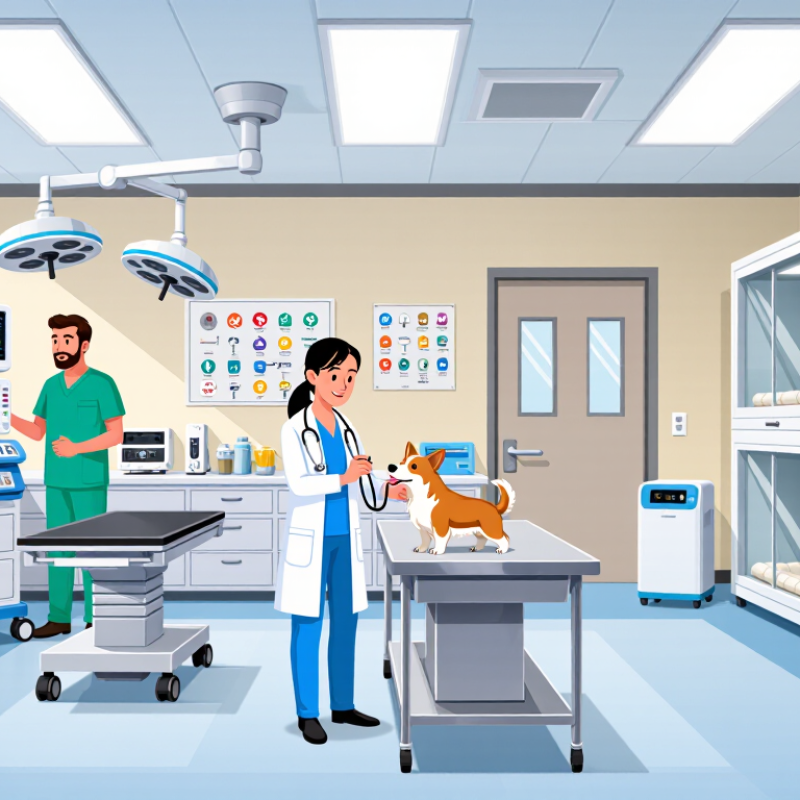
Before contacting a supplier, define what your small animal hospital actually treats. The 2024 AVMA Pet Ownership and Demographic Sourcebook reports about 59.8 million U.S. dog-owning households and 42.1 million cat-owning households. That mix affects your equipment choices. A feline-heavy clinic may need quieter recovery areas and smaller monitoring accessories. A canine-heavy practice may require stronger tables, larger kennels, and higher-capacity scales.
Map your daily workflow, not just your wish list. Record examination volume, surgical caseload, dental procedures, imaging needs, and emergency frequency. Then identify bottlenecks.
AAHA’s accreditation standards emphasize patient safety, anesthesia monitoring, infection control, and reliable emergency readiness. Therefore, your requirements should include oxygen delivery, multiparameter monitoring, surgical lighting, dental imaging, sterilization capacity, and temperature-controlled recovery.
Measure twice. Space matters. A large imaging unit can restrict movement in a narrow treatment room. I once viewed a low purchase price as efficiency. It was not. Maintenance delays cost more than expected.
Tips: Build a 12-month equipment usage sheet. Include peak days, staff numbers, service intervals, training needs, and backup plans. Ask each supplier for documented performance data, warranty limits, calibration procedures, and response times. Compare total ownership cost, not only the invoice. Leave room for growth, but avoid buying equipment that your team rarely uses. Recheck the list with veterinarians and technicians; the first version will probably miss something.
Verify Supplier Experience and Product Quality Standards
A reliable small animal hospital equipment supplier should prove experience, not merely claim it.
Ask for case histories from clinics with similar workloads, including anesthesia, dental, imaging, and patient-monitoring needs. The 2024 AVMA U.S. Pet Ownership and Demographics Sourcebook reports about 59.8 million dog-owning households and 42.1 million cat-owning households in the United States. That scale increases demand for dependable clinical equipment and responsive service.
Request certificates, inspection records, serial-number traceability, and calibration schedules. Electrical medical devices should be assessed against IEC 60601-1, while a supplier’s quality system should align with ISO 13485 principles. For risk control, ISO 14971 provides a useful framework.
These documents matter more than attractive product photographs. Check whether technicians receive documented training and whether replacement parts remain available after installation. Ask for service response times in writing.
Supplier references deserve direct calls.
Ask how quickly faults were resolved and whether staff training was practical. I would also inspect a demonstration unit for uneven seals, confusing controls, or noisy alarms. Small details become serious during a busy consultation. The checklist is not perfect. Some suppliers may provide excellent paperwork but weak after-sales support. Compare at least three proposals, record every promised specification, and confirm warranty exclusions before signing. Grand View Research’s 2024 veterinary equipment market analysis identifies monitoring, imaging, and anesthesia systems as major growth areas, making supplier competence increasingly important as equipment becomes more integrated.
Compare Equipment Range, Compatibility, and Customization Options
Choosing a small animal hospital equipment supplier starts with the equipment range, not a glossy catalog. In practice, a clinic may need examination tables, anesthesia machines, dental units, infusion pumps, imaging systems, and recovery cages. A narrow range can create gaps between diagnosis and treatment. Ask for specifications, maintenance requirements, and realistic delivery times. Photos are not enough. I once reviewed a setup where a compact table blocked the dental unit door. The equipment worked, but the room did not.
Compatibility deserves a physical check. Confirm electrical ratings, connector types, software communication, weight limits, and available floor space. Ask whether accessories from different systems can work safely together. A monitor may display readings, yet fail to export useful records. That small detail slows consultations. Request sample manuals and installation drawings before ordering. If the supplier offers on-site measurement, use it. Measurements taken from memory are unreliable. I have made that mistake myself.
Customization should solve a clinical problem, not add decoration. Useful options include adjustable table heights, washable surfaces, cage layouts for cats and dogs, and storage designed around daily workflows. Discuss animal size, staff height, cleaning routines, and future expansion. Reliable suppliers explain what can be changed, what cannot, and how changes affect servicing. They should provide training, spare-parts access, warranty terms, and a clear support contact. Be cautious when every request receives an immediate “yes.” Perfect flexibility may hide weak engineering or unclear accountability. Ask for a written configuration, compatibility list, and acceptance checklist before payment.
Assess Warranty Coverage, Technical Support, and Supplier Reputation
When choosing a small animal hospital equipment supplier, do not judge value by price alone.
A warranty should clearly state its duration, covered parts, labor terms, and exclusions. Ask whether coverage includes installation errors, calibration, and replacement components. Also confirm who pays shipping when a monitor or surgical table fails. Details matter. A low-cost unit can become expensive when repairs interrupt appointments and delay patient care.
Technical support deserves the same careful review.
Ask if trained technicians provide telephone, video, or on-site assistance. Response times should be written, not promised casually. Request the installation procedure, maintenance schedule, and user training materials before signing. Check whether spare parts remain available after the warranty ends. A supplier serving several time zones may offer better access during urgent equipment problems, but availability does not always mean technical competence. Test their support with a specific question about alarms, battery care, or cleaning protocols.
Supplier reputation requires evidence beyond polished testimonials.
Speak with veterinary hospitals that purchased similar equipment several years ago. Ask about repair delays, invoice accuracy, staff training, and repeated faults. Review service records when possible, while respecting patient confidentiality. Professional associations, documented qualifications, and transparent complaint handling can strengthen credibility. Online reviews help, but they may be incomplete or emotionally written. I would not treat a perfect rating as proof. A supplier that openly discusses limitations may be more dependable than one making effortless promises.