| 1 |
Standard Open TPLO |
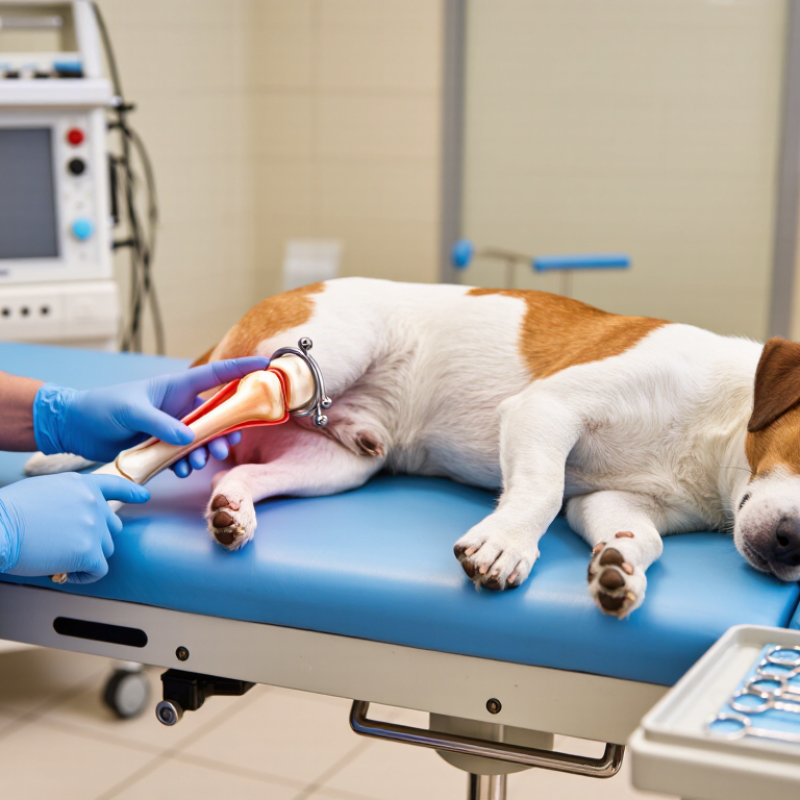
The surgeon exposes the proximal tibia, makes a curved cut in the tibial plateau, rotates the plateau to reduce cranial tibial thrust, and stabilizes the bone with a bone plate and screws. |
A common option for dogs with cranial cruciate ligament insufficiency, especially active, medium-sized, large, or athletic dogs. |
The meniscus is inspected. Damaged portions may be removed; a healthy meniscus may be preserved. |
Strict exercise restriction is essential while the bone heals, commonly for about 8–12 weeks, with follow-up imaging often used to assess healing. |
| 2 |
Minimally Invasive TPLO |
The same tibial plateau leveling concept is performed through smaller or more limited incisions, when the surgeon can safely achieve accurate bone cuts and implant placement. |
Selected patients when reduced soft-tissue disruption is appropriate and the surgeon has suitable equipment and experience. |
The meniscus can be evaluated through the surgical opening or with a camera, depending on the technique. |
Smaller incisions do not eliminate the need for bone healing time or strict postoperative restriction. |
| 3 |
Arthroscopy-Assisted TPLO |
A small camera is inserted into the stifle joint to inspect the cranial cruciate ligament remnants, cartilage, and menisci before or during the TPLO procedure. |
Useful when detailed joint evaluation is desired or when the surgeon wants to identify cartilage or meniscal disease not fully visible from outside the joint. |
The meniscus may be preserved, treated, or partially removed if a tear is identified. |
Arthroscopy adds specialized equipment, operating time, and cost, but may provide a detailed view of joint structures. |
| 4 |
Meniscus-Sparing TPLO |
The tibial plateau is leveled while the surgeon takes care to preserve an intact, stable meniscus and avoid unnecessary removal of healthy tissue. |
Patients with no visible meniscal tear or with a meniscus that appears stable during joint inspection. |
Healthy meniscal tissue is retained because it contributes to load distribution and joint function. |
A preserved meniscus can tear later, so owners should report renewed pain, clicking, or sudden worsening of lameness. |
| 5 |
TPLO With Selective Meniscectomy |
After the joint is inspected, the surgeon removes only the damaged or unstable portion of the meniscus and then completes the tibial plateau leveling procedure. |
When a meniscal tear is confirmed and the damaged tissue cannot be repaired or safely left in place. |
Only torn or unstable tissue is removed; as much healthy meniscus as possible is preserved. |
Removing less tissue may preserve more normal joint function, but arthritis can still progress after cruciate ligament disease. |
| 6 |
TPLO With Prophylactic Meniscal Release |
The surgeon performs the TPLO and makes a controlled release in part of the caudal meniscal attachment to reduce the chance of future meniscal entrapment. |
Used selectively because surgeons differ regarding its benefits, risks, and suitability for individual patients. |
The meniscus is not routinely removed, but its movement within the joint is altered by the release. |
Owners should ask why release is recommended, because it is not considered necessary in every TPLO case. |
| 7 |
Stump-Preserving TPLO |
Rather than removing every remnant of the damaged cranial cruciate ligament, the surgeon may preserve suitable tissue while leveling the tibial plateau. |
Considered when remaining ligament tissue is not severely diseased and does not interfere with joint motion or implant placement. |
The meniscus is assessed and managed separately according to its condition. |
Preserving tissue does not restore a normal cranial cruciate ligament; the primary stabilization comes from changing the tibial geometry. |
| 8 |
Double-Cut or Modified TPLO |
The surgeon uses a modified osteotomy plan, which may involve more than one controlled bone cut, to obtain the desired plateau angle or accommodate challenging tibial anatomy. |
Selected cases involving unusual bone shape, limited space, a previous osteotomy, or a need for specialized correction. |
Meniscal treatment follows the same inspection-based principles as other TPLO procedures. |
This is a specialized variation, so surgical planning and postoperative radiographs are particularly important. |
| 9 |
Wedge-Adjusted or Closing-Wedge TPLO Variant |
In addition to or instead of the conventional circular leveling cut, the surgeon removes or adjusts a wedge of bone to achieve the planned tibial plateau angle. |
May be considered when the tibial anatomy, existing deformity, or required correction makes a conventional cut less suitable. |
The meniscus is inspected and treated if damaged; the bone-correction method does not determine meniscal management. |
The procedure can alter limb geometry, so owners should discuss expected alignment, healing time, and possible complications. |
| 10 |
TPLO With Concurrent Corrective Osteotomy |
The surgeon performs TPLO while also correcting a clinically important angular or rotational deformity of the tibia through an additional planned bone cut. |
Reserved for selected patients with significant limb malalignment, previous injury, developmental deformity, or complex revision needs. |
The meniscus is evaluated independently and may be preserved, released, repaired, or partially removed when indicated. |
This is more complex than routine TPLO and may require longer surgery, more extensive rehabilitation, and closer radiographic monitoring. |